DIY Room Spray With Essential Oils: 8 Lovely Scent Options
I love the feeling of walking into a room that smells fresh, clean, and inviting. Sometimes, all it takes is a little fragrance to make a space feel more peaceful and cozy.
While store-bought air fresheners can be convenient, making your own room spray at home is a simple way to experiment with scents you genuinely love.
With a few ingredients and your favorite essential oils, you can create beautiful fragrances for your bedroom, living room, bathroom, or kitchen. Today, I’m sharing my easy DIY room spray recipe, along with eight lovely scent combinations to try at home.
Why Make Your Own Room Spray?
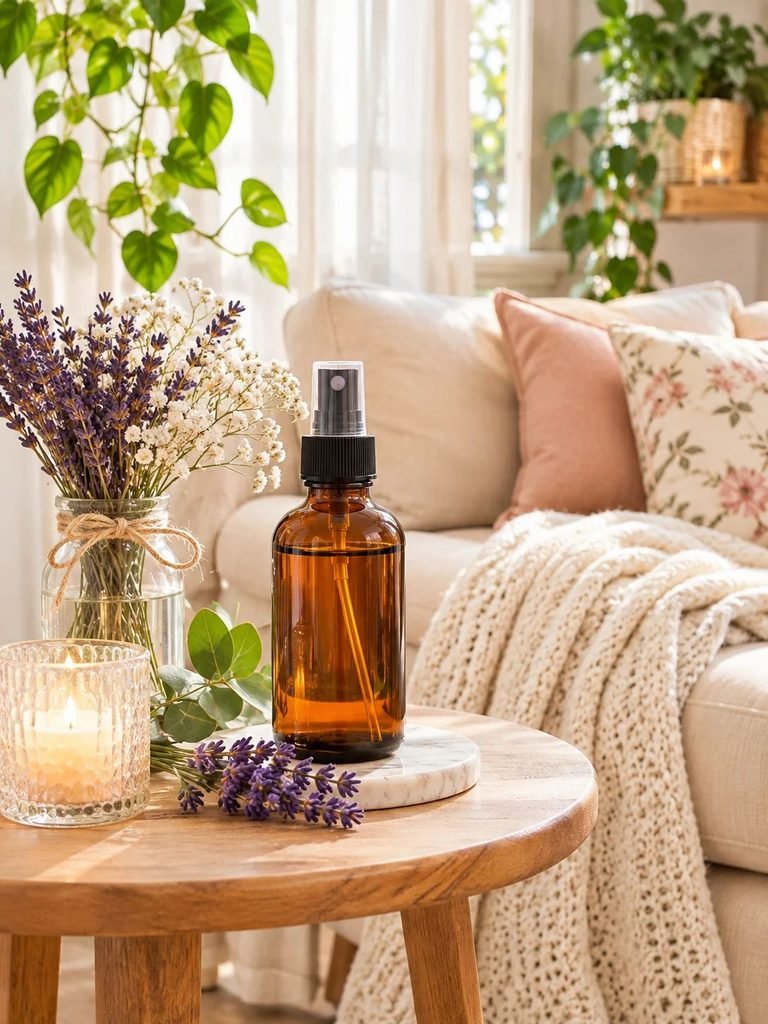
Homemade room sprays are easy to customize, budget-friendly, and fun to make. You can choose fresh citrus scents for your kitchen, calming lavender for your bedroom, or warm floral fragrances for your living room.
Here are a few reasons to try making your own:
- Customizable scents: Mix essential oils to create a fragrance that suits your home and personal preferences.
- Simple ingredients: You only need a few supplies to get started.
- Less packaging: Reusing a suitable spray bottle can help reduce waste.
- Lovely homemade gifts: A carefully prepared room spray makes a thoughtful gift for birthdays, housewarmings, and holidays.
Keep in mind that essential oils are concentrated substances, not automatically harmless because they are natural. Homemade sprays can also have a shorter shelf life and less reliable fragrance performance than commercially formulated products.
Ingredients You’ll Need
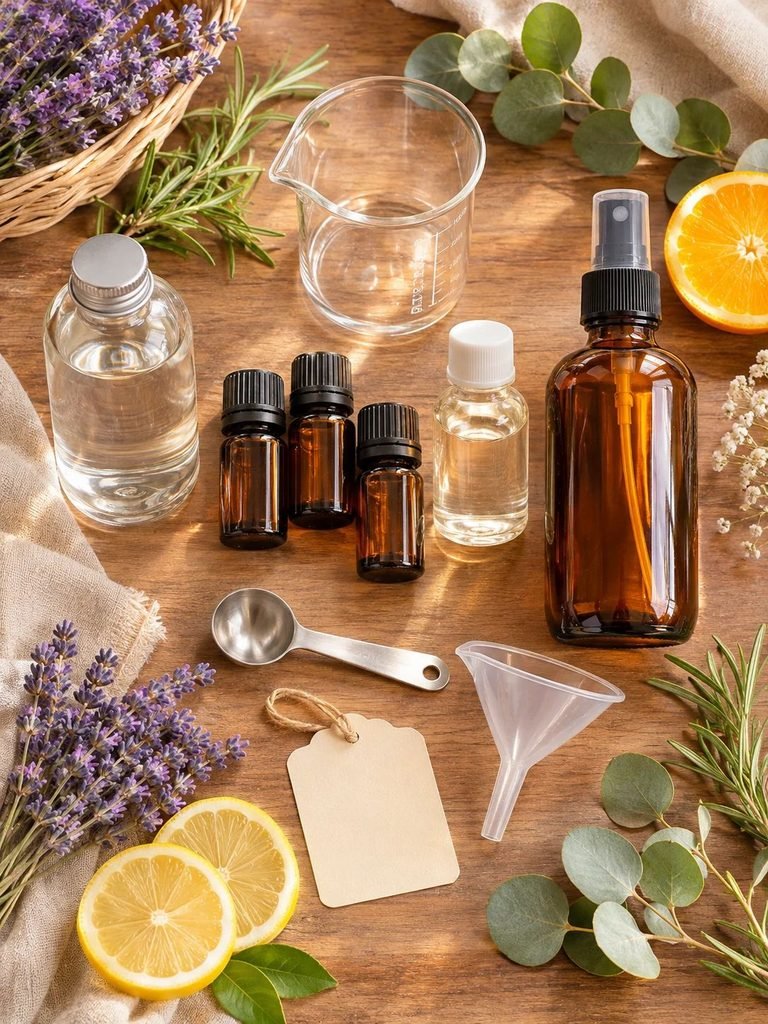
For one small bottle of room spray, gather the following:
- ½ cup distilled water
- 1 tablespoon high-proof perfumer’s alcohol or a suitable room-spray solubilizer, following the supplier’s instructions
- 15–20 drops of essential oils in your chosen combination
- One clean, suitable 4-ounce (approximately 120 ml) spray bottle
- A small funnel
- A label and pen
A quick note about alcohol and solubilizers: Essential oils do not dissolve evenly in plain water. They may float on the surface or form concentrated droplets, which can make the spray inconsistent and increase the chance of irritating skin or surfaces. A compatible solubilizer helps disperse the oils. Alcohol can also help, but a tablespoon may not be enough to fully dissolve every essential oil blend. Follow the product manufacturer’s formulation guidance rather than assuming the mixture is completely uniform.
Use distilled water instead of tap water to reduce the minerals and impurities introduced into your mixture. Distilled water does not make a homemade spray sterile or preserve it indefinitely.
Equipment You’ll Need
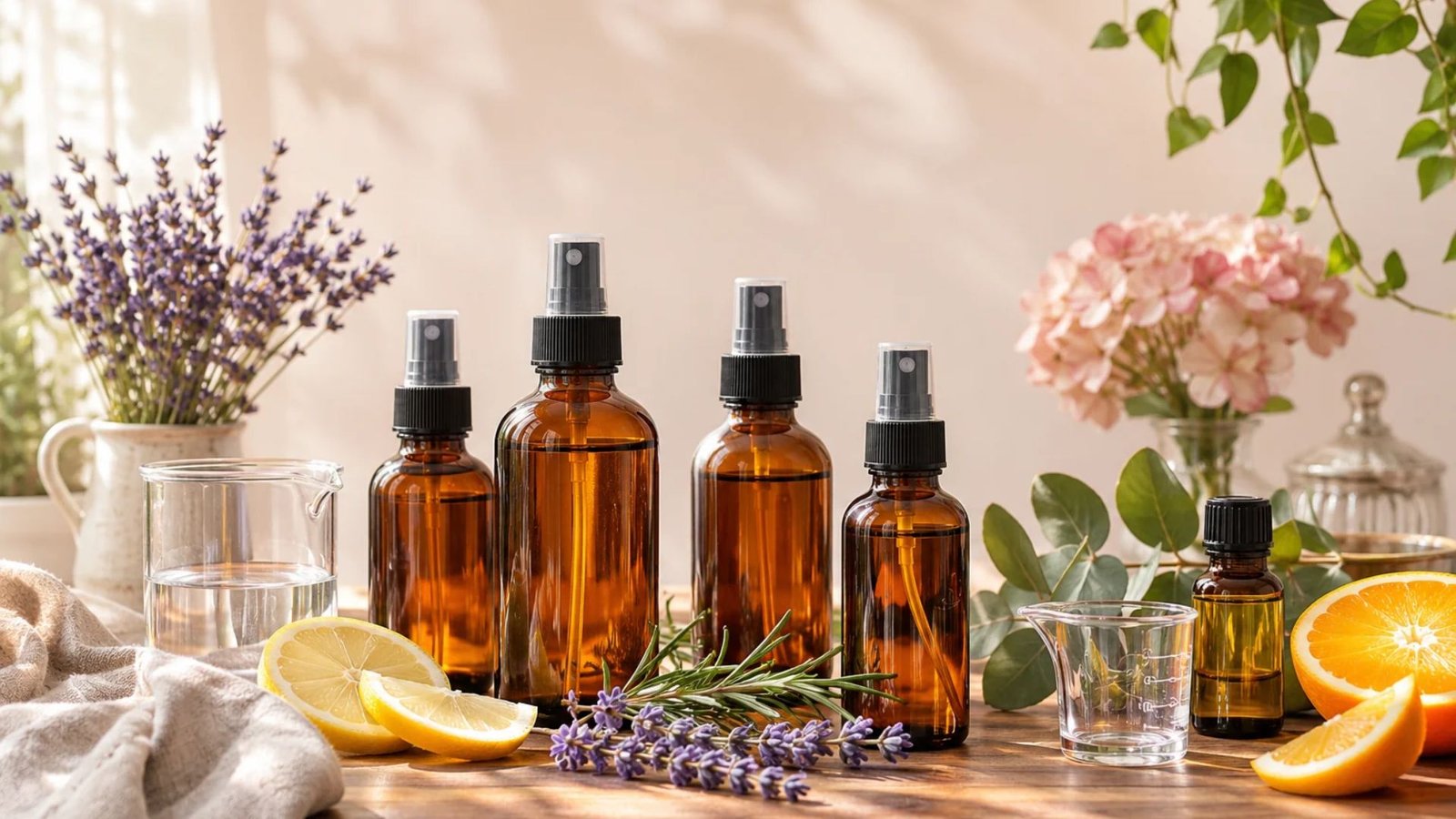
You do not need an elaborate setup for this project. A clean glass or compatible fine-mist spray bottle, a small funnel, measuring spoons, and a stirring utensil are usually enough.
Choose a bottle designed for the ingredients you use. Amber or cobalt glass can help protect essential oils from light, while a suitable plastic bottle may also work if its manufacturer confirms compatibility.
Wash and thoroughly dry reusable equipment before preparing your spray. Avoid bottles that previously contained cleaning chemicals or other potentially hazardous products.
How to Make DIY Room Spray With Essential Oils
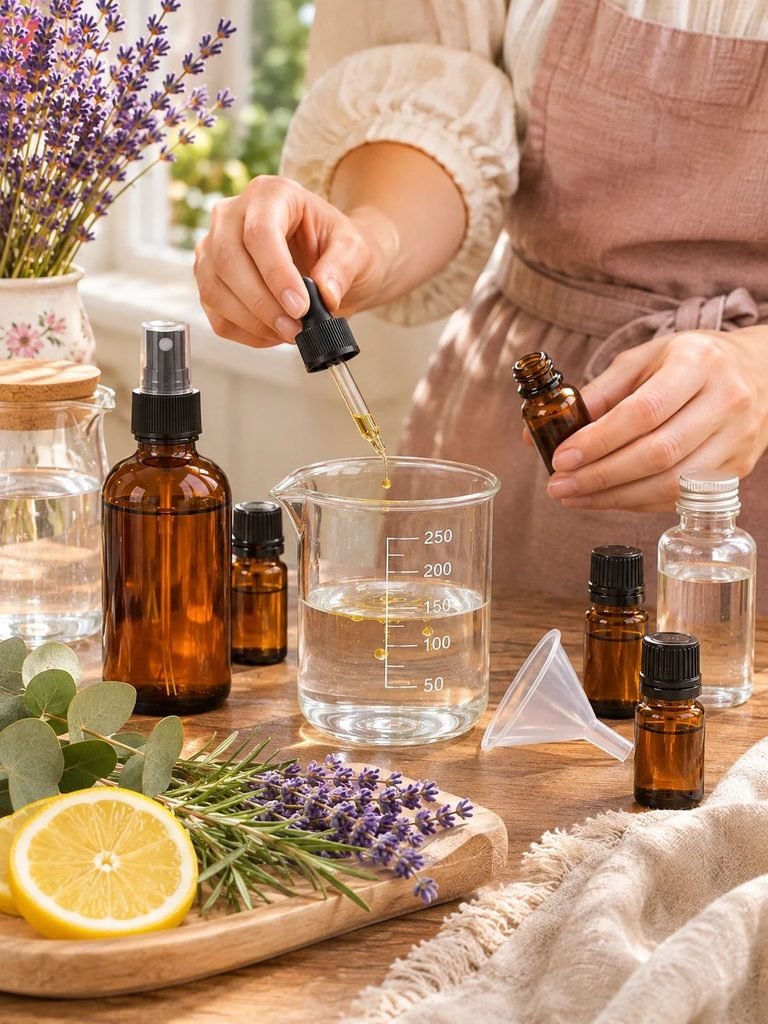
Follow these simple steps to prepare your homemade fragrance.
Step 1: Clean Your Spray Bottle
Wash your bottle, spray nozzle, funnel, and measuring tools thoroughly. Rinse away any soap residue and let everything dry completely.
Starting with clean equipment helps reduce contamination, although ordinary washing does not sterilize the bottle.
Step 2: Combine Your Essential Oils
Choose one of the eight scent combinations below. Add the recommended drops to a small, clean mixing container.
If you are new to blending essential oils, begin with a simple combination of two oils. This makes it easier to discover which fragrances you enjoy together.
Step 3: Add Your Solubilizer or Alcohol
Add a compatible room-spray solubilizer or the appropriate amount of perfumer’s alcohol, following the manufacturer’s directions.
Mix thoroughly until the ingredients are combined as directed. Do not assume that clear-looking liquid means the essential oils are fully solubilized.
Step 4: Add the Distilled Water
Measure your distilled water and add it to the mixture. Stir gently or mix according to the solubilizer manufacturer’s instructions.
If the formula separates, develops unexpected cloudiness, or leaves visible oil droplets, do not use it as a fine mist until you have corrected the formulation. Simply shaking the bottle may not provide consistent dispersion.
Step 5: Transfer the Mixture to Your Bottle
Using a clean funnel, carefully transfer the finished mixture into your spray bottle. Secure the spray top tightly and wipe the outside of the bottle if needed.
Step 6: Label Your Room Spray
Write the scent name and preparation date on a label. You can also note the ingredients and add a reminder to keep the spray away from children and pets.
Store the bottle according to the requirements of the ingredients you used. Do not assume a water-based homemade spray is safe to keep indefinitely. If you do not have a properly formulated and preserved product, make small batches and discard them promptly if the smell, appearance, or consistency changes.
8 DIY Room Spray Essential Oil Scent Options
Now comes the fun part! These eight combinations offer a range of fresh, floral, herbal, and cozy fragrances. The drop counts below are starting points for experimenting with a properly formulated room-spray base, not a guarantee of safety or solubility.
1. Lavender and Vanilla-Inspired
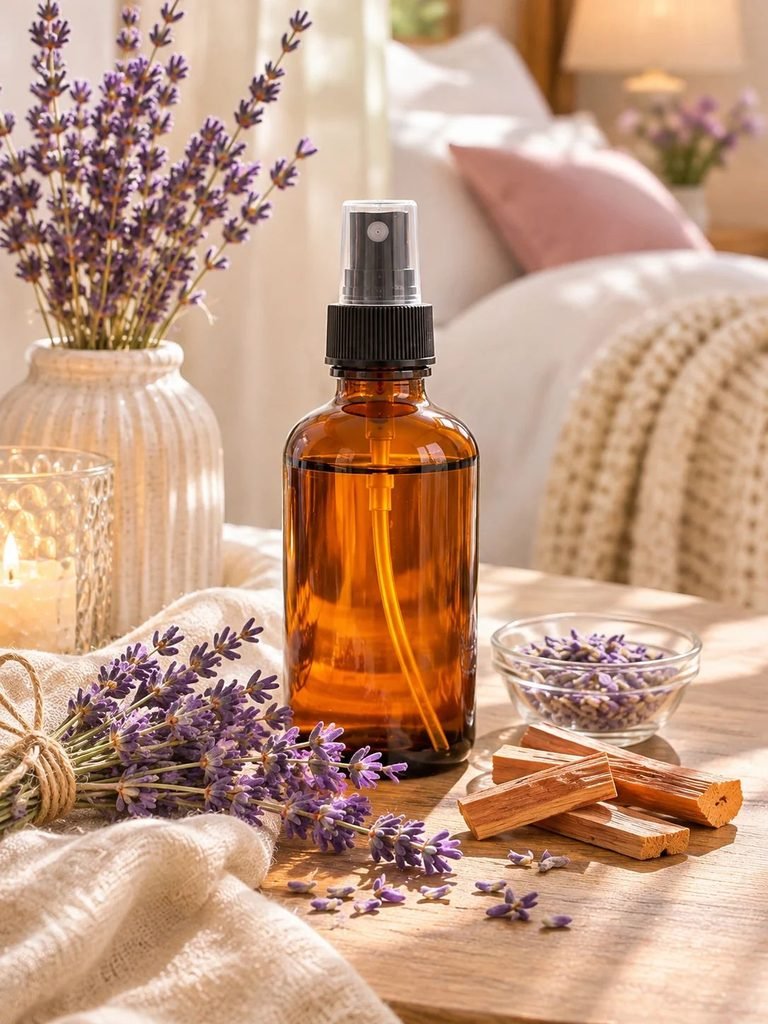
Scent profile: Soft, floral, warm, and cozy.
Try combining:
- 10 drops lavender essential oil
- 5 drops cedarwood essential oil
This blend creates a gentle, woody-floral fragrance that works beautifully in a bedroom or reading nook. If you love the idea of vanilla, use a fragrance ingredient specifically approved for room sprays rather than assuming vanilla extract or a vanilla fragrance oil is interchangeable with essential oil.
2. Fresh Lemon and Peppermint
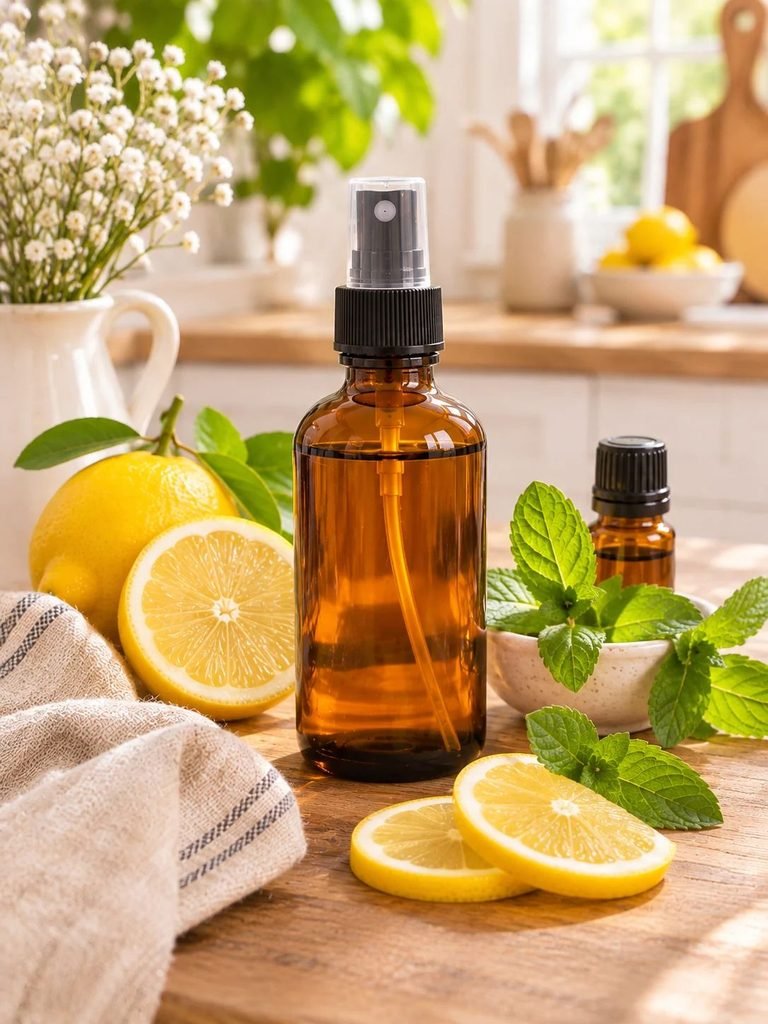
Scent profile: Bright, crisp, and refreshing.
Try combining:
- 10 drops lemon essential oil
- 5 drops peppermint essential oil
The bright citrus scent pairs with the cool, minty fragrance to create a fresh-smelling blend for a kitchen or entryway.
Some citrus oils can be phototoxic when applied to skin, especially expressed bergamot and certain lemon or lime oils. This is primarily a concern with skin exposure, but it is another reason to avoid using room sprays as body sprays. Keep the product away from eyes and skin.
3. Sweet Orange and Cinnamon
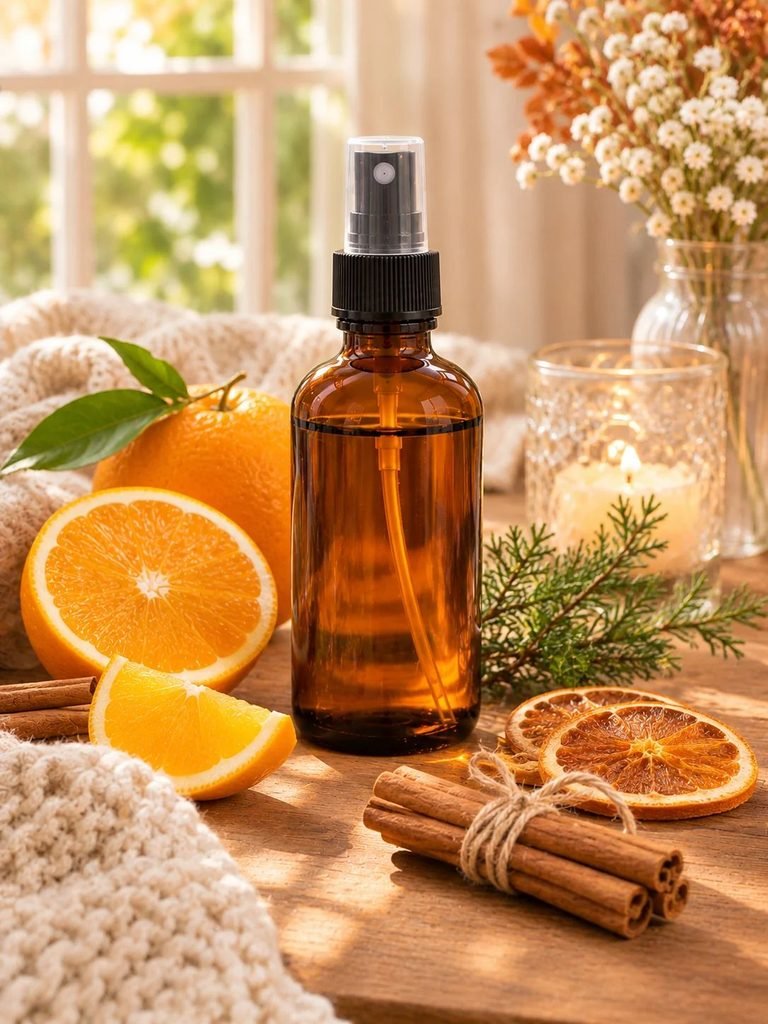
Scent profile: Warm, sweet, and comforting.
Try combining:
- 10 drops sweet orange essential oil
- 3 drops cinnamon leaf essential oil
This combination has a cozy, spiced-citrus character that feels especially inviting during the cooler months.
Cinnamon essential oil can be irritating or sensitizing, so use particular care when selecting and handling it. For a gentler starting point, use a room-spray fragrance specifically formulated to smell like orange and cinnamon rather than improvising with concentrated cinnamon oil.
4. Lavender and Bergamot
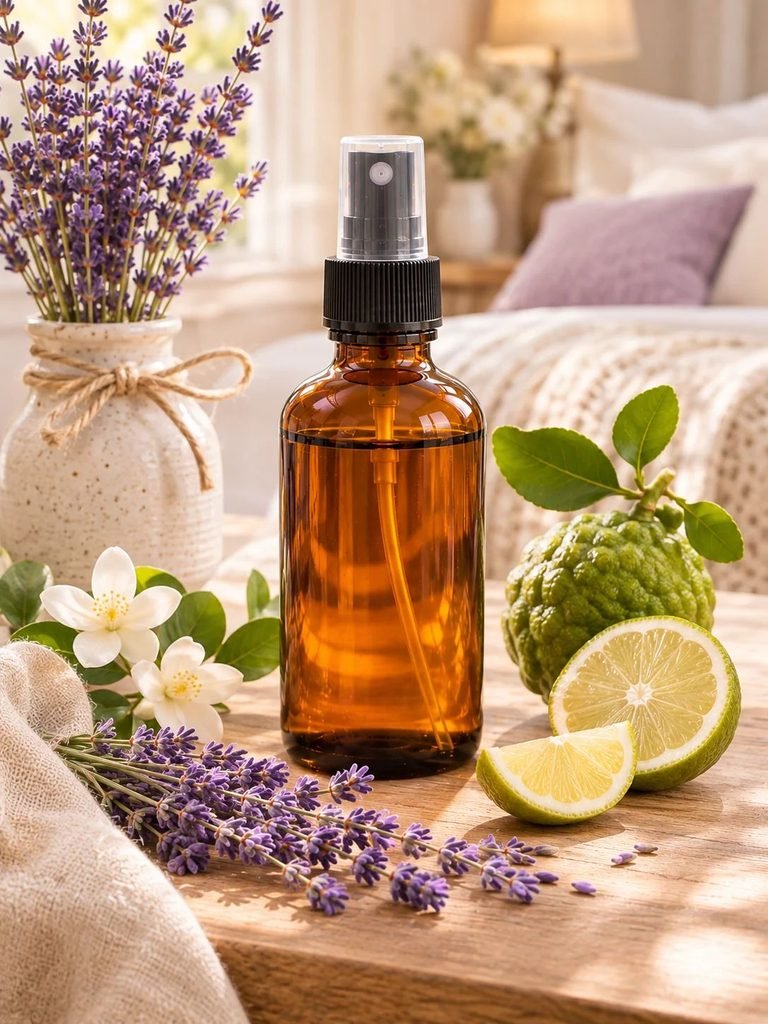
Scent profile: Soft, fresh, and lightly citrusy.
Try combining:
- 8 drops lavender essential oil
- 7 drops bergamot essential oil
Lavender adds a familiar floral note, while bergamot brings a bright citrus character. This is a lovely option for a bedroom or a quiet corner where you unwind.
Choose bergamot oil appropriate for your intended use, and remember that room fragrance is not a substitute for ventilation or other measures that support good indoor air quality.
5. Eucalyptus and Rosemary
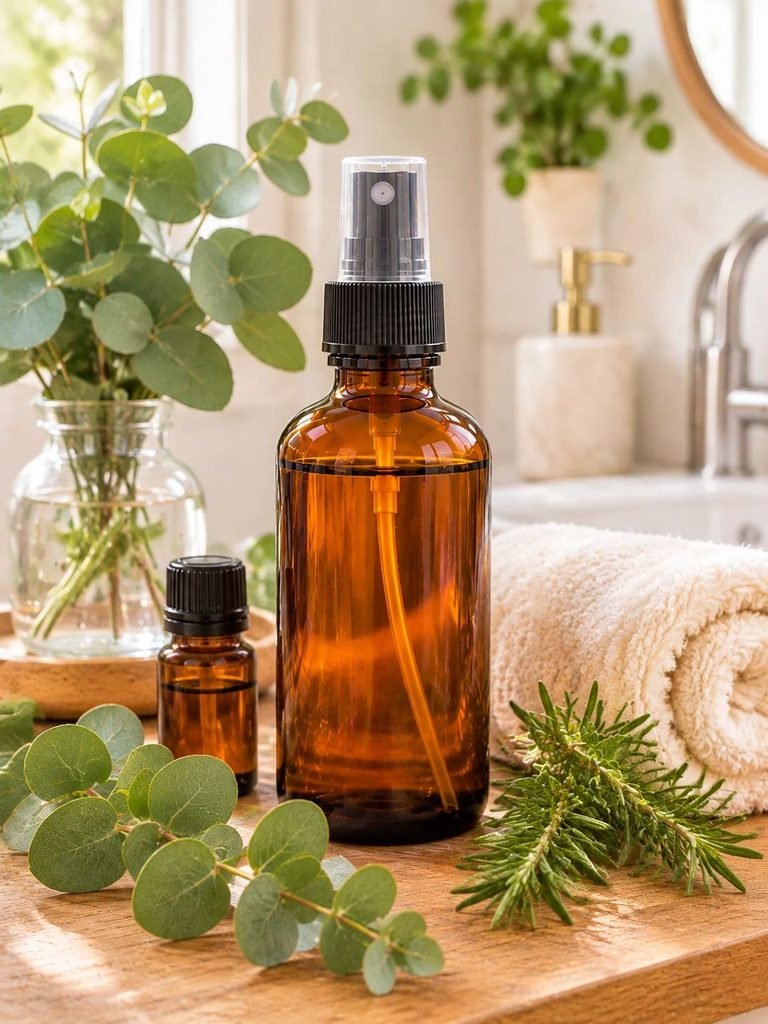
Scent profile: Herbal, green, and invigorating.
Try combining:
- 8 drops eucalyptus essential oil
- 7 drops rosemary essential oil
This blend has a fresh herbal character that can work well in a bathroom or home office.
Use eucalyptus and rosemary products cautiously around children and pets. Certain essential oils can be hazardous if inhaled in concentrated amounts or swallowed, and their suitability varies by species, formulation, and exposure.
6. Sweet Orange and Lavender
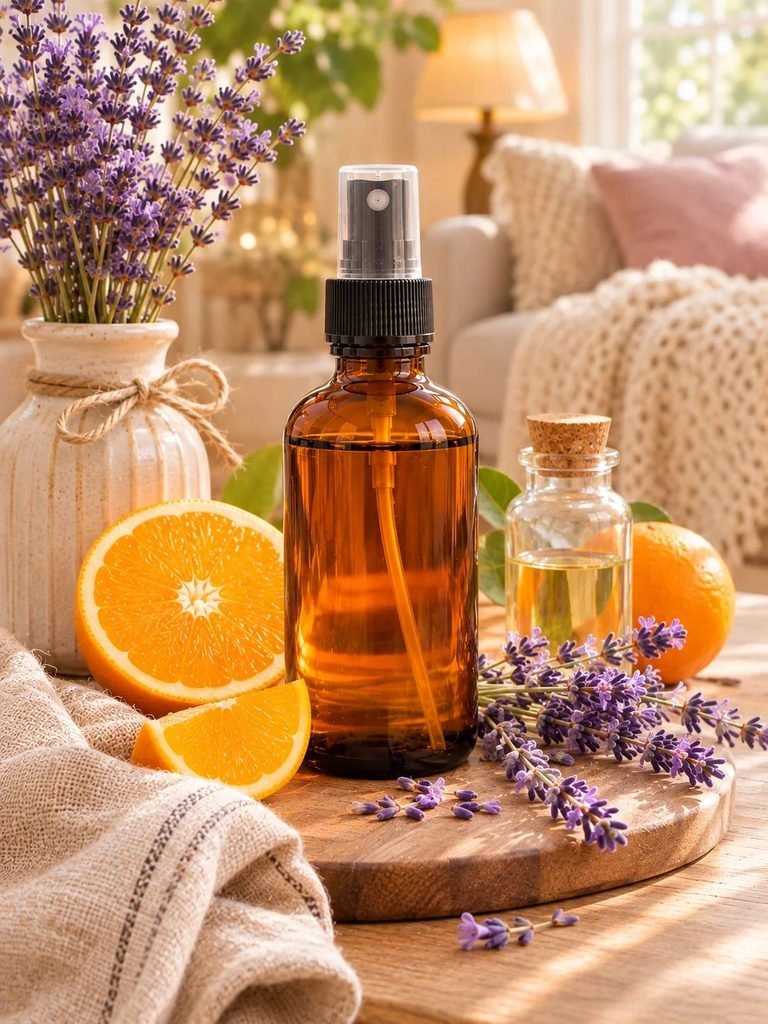
Scent profile: Fruity, floral, and cheerful.
Try combining:
- 10 drops sweet orange essential oil
- 5 drops lavender essential oil
The gentle floral note of lavender balances the sweet, cheerful fragrance of orange. It is a versatile scent for a living room, guest room, or entryway.
For a softer fragrance, begin with a lower concentration in a properly formulated base and test the scent in a well-ventilated room.
7. Cedarwood and Frankincense
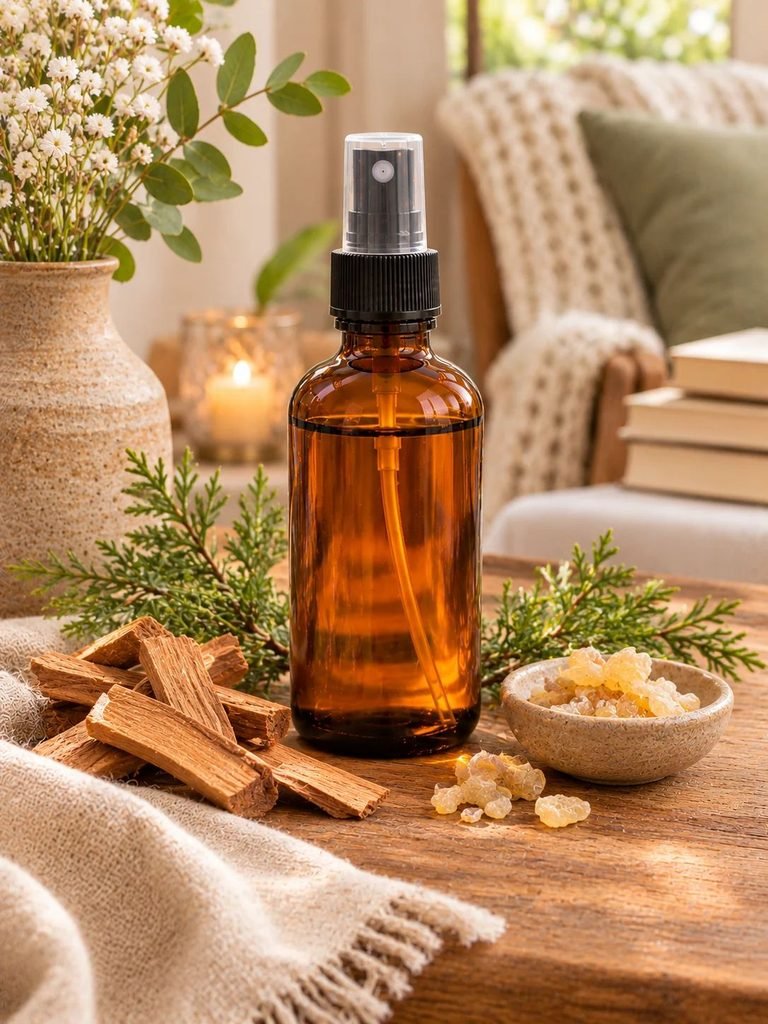
Scent profile: Earthy, woody, and warm.
Try combining:
- 8 drops cedarwood essential oil
- 7 drops frankincense essential oil
This combination creates a deeper, woodsy fragrance that feels lovely in a study, reading corner, or living room.
If you prefer understated fragrances over sweet or fruity scents, this blend is a good one to explore.
8. Geranium and Sweet Orange
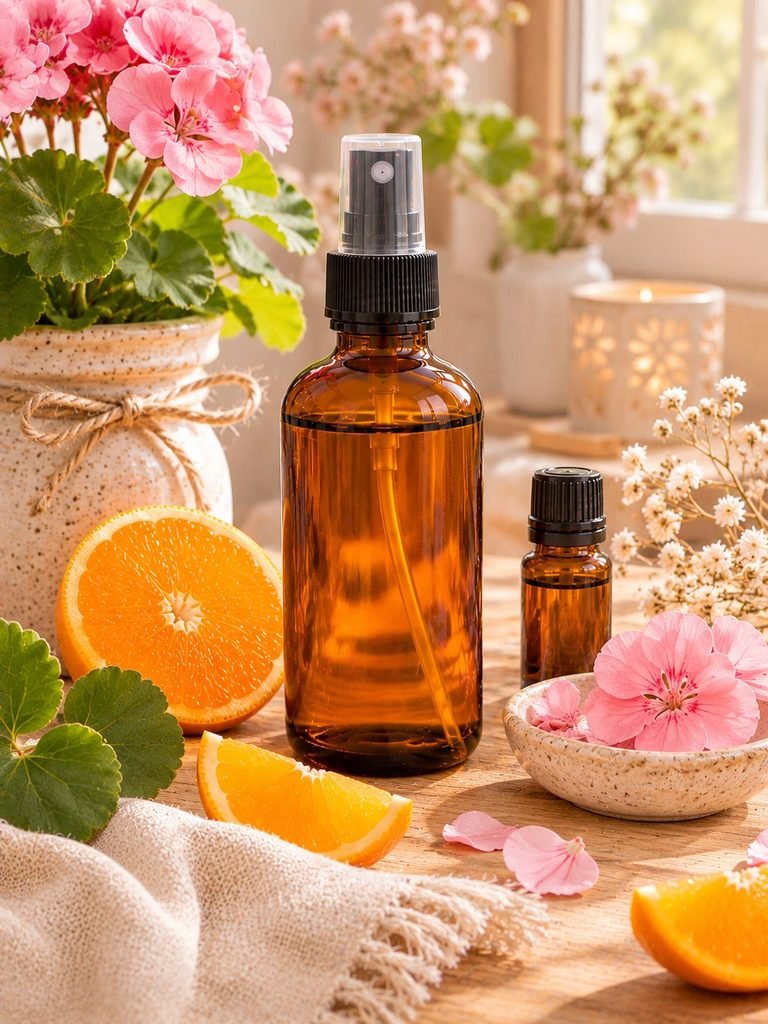
Scent profile: Floral, fresh, and slightly sweet.
Try combining:
- 8 drops geranium essential oil
- 7 drops sweet orange essential oil
Geranium adds a rosy floral note, while orange keeps the blend bright and uplifting. It is a pretty choice for a guest room or living area.
If you find the floral fragrance too strong, reduce the overall fragrance level rather than adding more water to an already formulated spray without checking the product instructions.
Tips for Making Your Room Spray Smell Lovely
A homemade room spray should smell pleasant without overwhelming the space. These tips can help you get a better result.
- Start with fewer fragrance ingredients: Two or three complementary oils are often easier to balance than a large collection of competing scents.
- Use a compatible base: Water and essential oils do not naturally mix, so select a formula designed to disperse the oils properly.
- Test in a small area: Spray a small amount into the air in a well-ventilated room, following the product’s directions. Avoid spraying onto fabrics, furniture, painted surfaces, or flooring unless the formula has been tested for those materials.
- Keep a blending notebook: Write down the oils and amounts you use so you can recreate a favorite combination.
- Choose the right fragrance for the room: Bright citrus scents may suit kitchens, while woody or floral blends may be more appealing in a living room.
Remember that a room spray primarily adds fragrance; it does not remove the underlying cause of unpleasant odors or purify indoor air.
How to Store Homemade Room Spray
Store your spray in a tightly closed, clearly labeled bottle, away from direct sunlight, heat, and children. Follow any storage instructions provided by the manufacturer of your solubilizer or room-spray base.
Because this recipe contains water, microbial growth is a potential concern. Essential oils alone are not a reliable preservative, and alcohol at a low concentration should not be assumed to preserve the product. For a longer-lasting spray, use a professionally formulated room-spray base with an appropriate preservation system and follow its directions.
Discard a homemade mixture if its appearance, smell, or consistency changes. Do not use a product that develops an unusual odor, visible growth, or unexpected separation.
Important Safety Tips
Before using your DIY room spray, keep these precautions in mind:
- Never spray directly onto your face, skin, or eyes.
- Avoid inhaling a concentrated mist or spraying close to your nose.
- Keep the spray away from flames and heat if it contains alcohol.
- Avoid spraying near food, dishes, aquariums, or pet bedding.
- Use extra caution around babies, young children, pregnant people, and anyone with asthma or fragrance sensitivities.
- Keep essential oils and finished sprays out of reach of children and pets. Cats, birds, and other animals may be particularly sensitive to certain airborne substances.
- Never assume an essential oil is safe for every household member simply because it is plant-derived.
If you have pets, respiratory sensitivities, or concerns about a particular essential oil, check with an appropriate veterinarian or healthcare professional before using it in your home.
Frequently Asked Questions
Can I make room spray with just essential oils and water?
You can physically combine them, but they will not reliably mix. The oil may float on the surface or form concentrated droplets. A suitable solubilizer or professionally formulated room-spray base is a better choice for a consistent product.
How many drops of essential oil should I use?
That depends on the specific oils, the intended use, and the room-spray base. The combinations in this guide are starting points for scent blending, not universal safety limits. Follow the base manufacturer’s recommended fragrance concentration.
Can I use this spray on my pillows and curtains?
Not without testing the formulation for fabric compatibility. Essential oils and other fragrance ingredients may stain, leave residue, or damage delicate materials. Avoid spraying bedding or items that come into prolonged contact with skin unless the product is specifically designed for that purpose.
How long does homemade room spray last?
There is no universal shelf life for a water-based homemade spray. Its stability and microbial safety depend on the formulation, preservative system, packaging, and preparation conditions. Without a validated preservation system, do not assume it will remain safe for weeks or months.
Can I use fragrance oils instead of essential oils?
Some fragrance oils are designed for room sprays, while others are intended for candles, soap, or different applications. Check the manufacturer’s specifications and use only ingredients suitable for your chosen formulation.
Final Thoughts
Making a DIY room spray is a lovely way to explore fragrances and add a personal touch to your home. From the fresh combination of lemon and peppermint to the warm notes of cedarwood and frankincense, these eight scent ideas give you plenty of inspiration to experiment with.
The key is to choose ingredients designed for room sprays, blend them correctly, and use your finished product thoughtfully. With a little creativity and careful preparation, you can discover a signature home fragrance that feels welcoming, fresh, and uniquely yours.