Best Fall Scented Candle Recipes to Make at Home
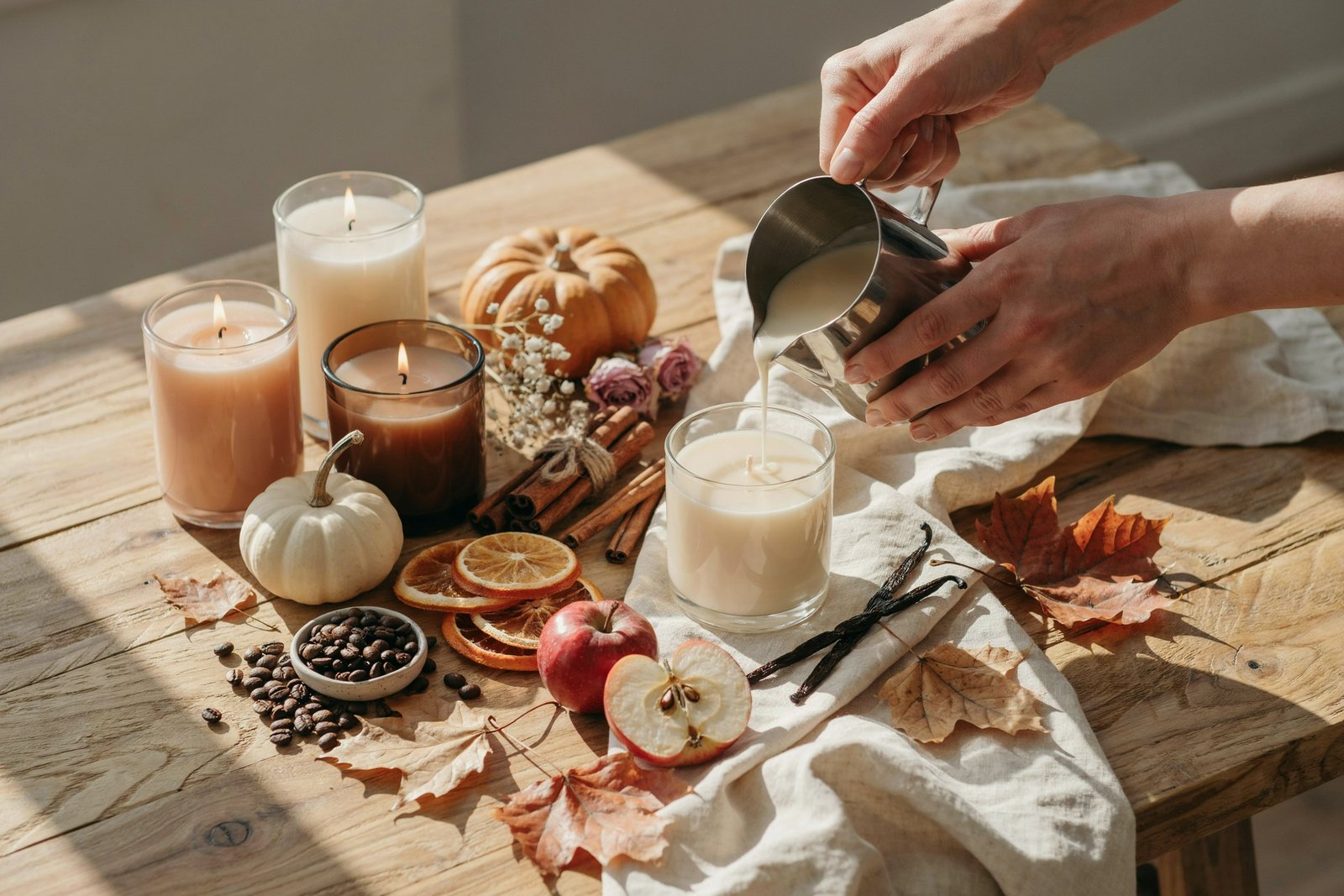
Fall has always felt like an invitation to slow down for me. I love the little rituals that make home feel warmer the soft blanket on the sofa, a favorite mug of something sweet, golden light coming through the windows, and, of course, a beautiful candle flickering nearby.
Making my own fall-scented candles takes that cozy feeling one step further because I can create exactly the fragrance I’m craving.
From creamy vanilla pumpkin and warm apple cinnamon to coffee, maple, and comforting spices, these homemade candles are surprisingly simple to make. If you’ve been wanting to try candle making, these cozy fall recipes are the perfect place to begin.
Why Make Your Own Fall-Scented Candles?

There’s something especially satisfying about making a candle from scratch.
You get to choose the wax, vessel, wick, color, and—my favorite part—the fragrance. Instead of settling for whatever scent happens to be available in a store, you can create a candle that smells exactly the way you want your home to feel.
Fall is also one of the easiest seasons to experiment with fragrance because the scent palette is naturally rich and comforting. Think:
- Pumpkin and vanilla
- Apple and cinnamon
- Maple and brown sugar
- Coffee and cream
- Orange and clove
- Cedarwood and amber
- Cranberry and orange
- Caramel and spice
These combinations can make a room feel warm and inviting without needing much decoration.
And if you’re planning to give homemade gifts during the autumn season, these candles are lovely little handmade presents for friends, teachers, neighbors, hostesses, or family members.
What You’ll Need to Make Fall Candles

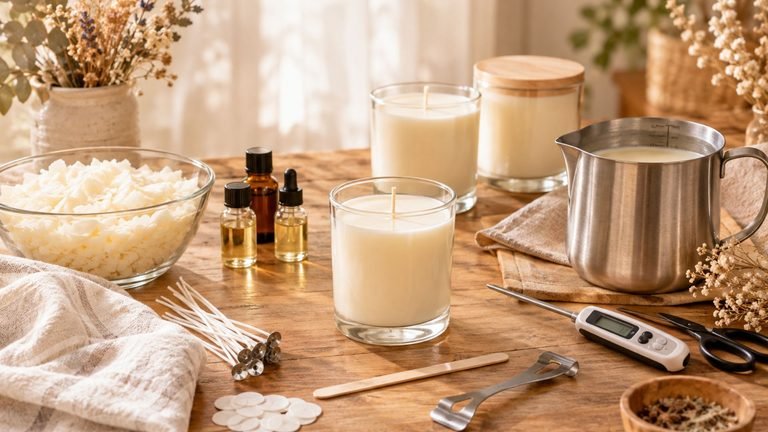
Before getting started, gather your basic candle-making supplies.
Basic supplies
- Soy candle wax or another wax suitable for container candles
- Candle-safe fragrance oils
- Heat-safe candle containers
- Properly sized candle wicks
- Wick stickers or candle adhesive
- Digital kitchen scale
- Heat-safe pouring pitcher
- Double boiler or suitable wax-melting setup
- Thermometer
- Wooden stirrer or silicone spatula
- Wick centering device, chopsticks, or wooden skewers
- Scissors or wick trimmer
- Paper towels for cleanup
- Labels, if you’re making candles as gifts
I recommend using a digital scale rather than measuring fragrance by teaspoons or drops. Fragrance load is calculated by weight, and the correct amount depends on your specific wax and fragrance.
A common starting point for many soy container candles is around 6–10%, but you should follow the manufacturer’s maximum fragrance-load recommendation for your particular wax.
A Quick Fragrance-Load Guide
This is one of the most important things to understand before making scented candles.
Fragrance load = fragrance oil weight ÷ wax weight × 100
For example, if you are working with 500 g of soy wax and your wax allows an 8% fragrance load:
500 × 0.08 = 40 g fragrance oil
So your batch would contain:
- 500 g soy wax
- 40 g fragrance oil
Don’t assume that adding more fragrance automatically makes a candle smell stronger. Too much fragrance can lead to problems such as oil sweating, poor wick performance, and an unstable or poor-quality burn.
For beginners, I recommend starting with the fragrance-load percentage recommended by your wax supplier and testing a small batch before making a larger quantity.
1. Cozy Pumpkin Spice Candle

Let’s start with the scent that practically screams fall.
Pumpkin spice is warm, sweet, spicy, and comforting. I love it for living rooms, kitchens, reading corners, and anywhere you want that unmistakable autumn feeling.
Scent profile
Pumpkin + vanilla + cinnamon + nutmeg + clove
For a 500 g wax batch, use your wax manufacturer’s recommended fragrance load. At an 8% starting load, that would be 40 g total fragrance oil.
Try this fragrance blend:
- 16 g pumpkin spice fragrance oil
- 12 g vanilla fragrance oil
- 7 g cinnamon fragrance oil
- 3 g nutmeg fragrance oil
- 2 g clove fragrance oil
The pumpkin gives you the recognizable fall character, while vanilla makes the blend creamy and soft. Cinnamon and nutmeg bring warmth, and the small amount of clove adds depth.
How to make it
- Melt your wax according to the instructions for your specific wax.
- Secure your wick in the center of your container.
- Allow the wax to reach the manufacturer’s recommended fragrance-addition temperature.
- Add your fragrance blend.
- Stir slowly and thoroughly according to your wax supplier’s instructions.
- Pour into your prepared container.
- Keep the wick centered while the candle cools.
- Allow the candle to fully set before trimming the wick.
- Cure the candle according to your wax manufacturer’s recommendation before evaluating the final scent throw.
Tip: If your pumpkin spice blend smells too sharp, increase the vanilla portion slightly while reducing another fragrance so that your total fragrance load stays the same.
2. Warm Apple Cinnamon Candle

If pumpkin spice isn’t your thing, apple cinnamon is such a beautiful alternative.
This one reminds me of freshly baked apple desserts, cozy kitchens, and chilly afternoons when something delicious is cooking in the oven.
Scent profile
Crisp apple + cinnamon + vanilla + maple
For an 8% fragrance load using 500 g wax:
- 18 g apple fragrance oil
- 10 g cinnamon fragrance oil
- 7 g vanilla fragrance oil
- 5 g maple fragrance oil
The apple should remain the star of the blend. Cinnamon adds warmth, while vanilla and maple make it feel sweeter and more bakery-inspired.
Best room for this candle
Try it in:
- The kitchen
- Dining room
- Entryway
- Living room
It’s especially lovely when you’re entertaining because the scent feels familiar and welcoming without being too floral.
3. Vanilla Maple Candle
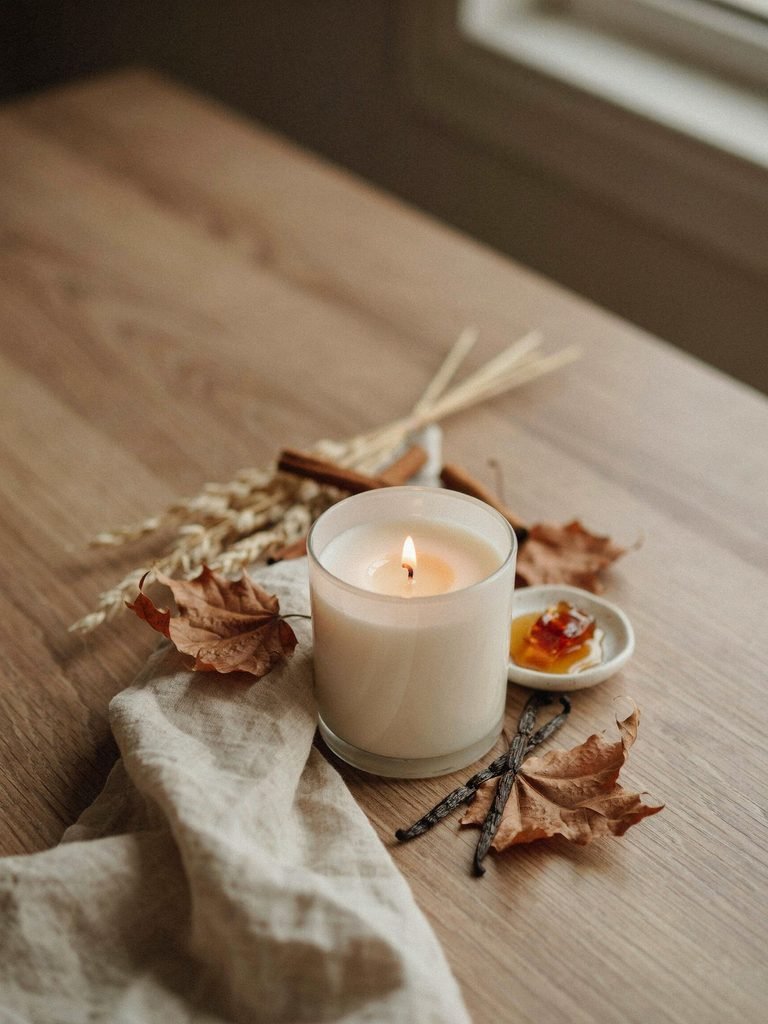
This is for the girls who love their fall scents sweet, creamy, and luxurious.
Vanilla maple has a soft gourmand quality that feels almost like pancakes, warm syrup, and freshly baked treats.
Scent profile
Vanilla + maple + caramel + amber
For 500 g wax at an 8% load:
- 16 g vanilla fragrance oil
- 12 g maple fragrance oil
- 7 g caramel fragrance oil
- 5 g amber fragrance oil
The amber is important because it keeps the blend from becoming overwhelmingly sweet.
My favorite styling idea
Pour this candle into a simple amber or cream-colored vessel and add a minimal label.
You don’t need a complicated decoration. The fragrance already gives this candle that luxurious fall personality.
4. Spiced Orange & Clove Candle

If you prefer fall fragrances that aren’t dessert-like, try orange and clove.
It’s warm and spicy but still has a bright citrus note that keeps the fragrance from feeling heavy.
Scent profile
Sweet orange + clove + cinnamon + cedarwood
For 500 g wax at an 8% load:
- 16 g orange fragrance oil
- 8 g cedarwood fragrance oil
- 8 g cinnamon fragrance oil
- 5 g clove fragrance oil
- 3 g vanilla fragrance oil
Orange gives the opening brightness, while cedarwood creates a deeper background. Cinnamon and clove provide the traditional autumn warmth.
Important note
Don’t place dried orange slices, cinnamon sticks, cloves, herbs, or other decorative botanicals directly around the wick simply because they look pretty.
Anything added to a candle becomes part of the burning environment. For a safer finished candle, keep the wax surface clear and use decorative elements on the outside of the vessel or label instead.
5. Cozy Coffee Shop Candle
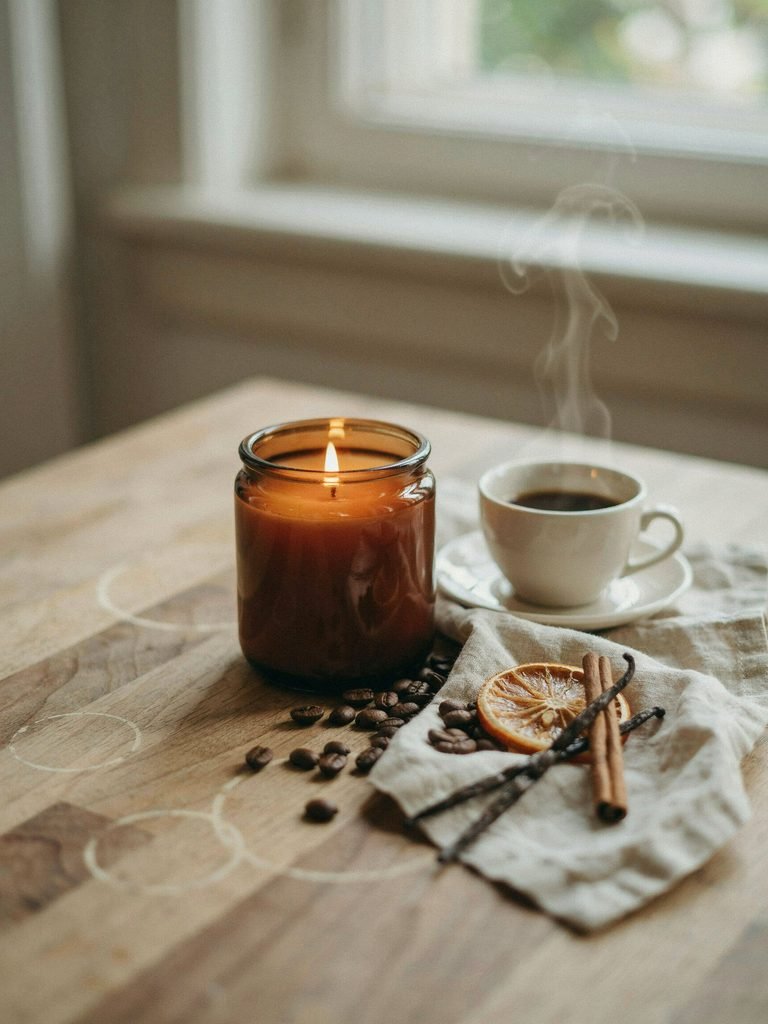
This one is for anyone who loves the smell of walking into a little café on a cool autumn morning.
A coffee candle can smell delicious on its own, but adding vanilla and caramel gives it a much softer and more feminine finish.
Scent profile
Coffee + vanilla + caramel + cream
For 500 g wax at an 8% load:
- 18 g coffee fragrance oil
- 10 g vanilla fragrance oil
- 8 g caramel fragrance oil
- 4 g cream or milk fragrance oil
This candle would be gorgeous in a kitchen, home office, reading nook, or bedroom.
Make it more sophisticated
If the coffee scent feels too sweet, replace a small portion of the caramel fragrance with an amber or sandalwood fragrance.
That creates a deeper coffee-house scent rather than a straight dessert fragrance.
6. Cranberry Orange Fall Candle

Not every fall candle needs to smell spicy.
Cranberry and orange create a beautiful fruity autumn scent that feels especially appropriate for the transition from early fall into the holiday season.
Scent profile
Cranberry + orange + vanilla + cedarwood
For 500 g wax at an 8% load:
- 17 g cranberry fragrance oil
- 12 g orange fragrance oil
- 6 g vanilla fragrance oil
- 5 g cedarwood fragrance oil
The cranberry gives the candle a slightly tart character, while orange brightens the blend. Vanilla softens the edges and cedarwood gives it a grounding base.
Where I’d use it
This is beautiful for:
- Entryways
- Dining rooms
- Guest rooms
- Kitchens
- Fall gatherings
It also makes a lovely handmade gift because the fragrance isn’t limited to people who enjoy pumpkin spice.
7. Warm Amber & Cedarwood Candle
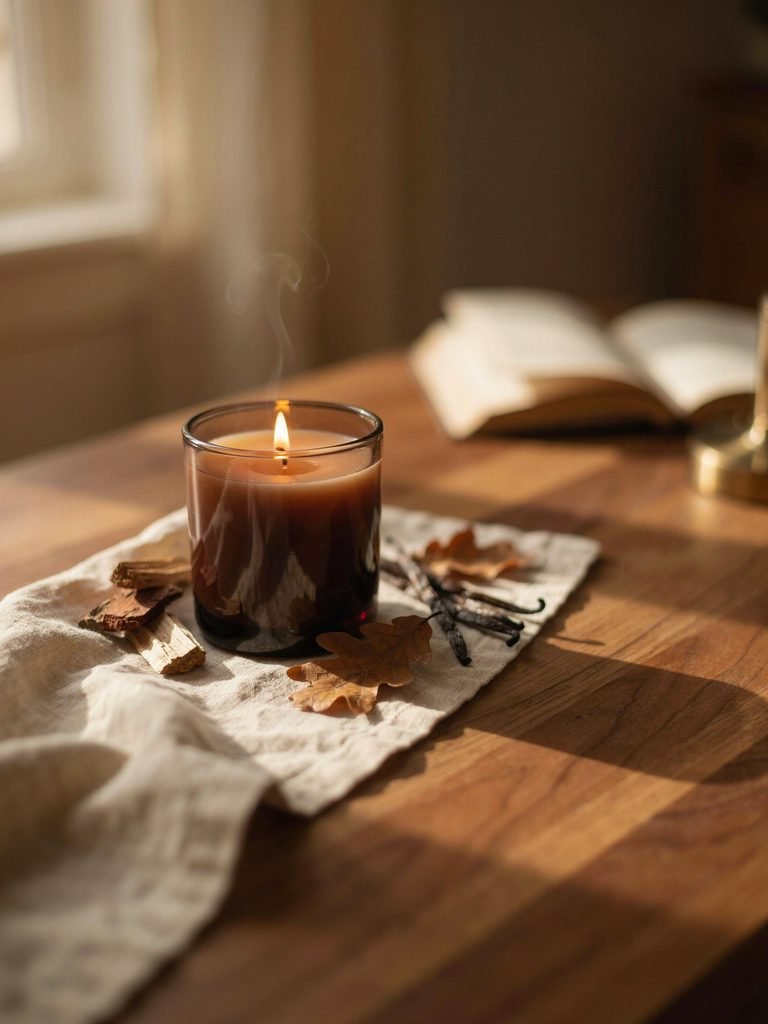
For something a little more grown-up and sophisticated, reach for woody fragrances.
This candle is less bakery-inspired and more like a cozy evening spent wrapped in a blanket while rain taps against the windows.
Scent profile
Amber + cedarwood + sandalwood + vanilla
For 500 g wax at an 8% load:
- 15 g amber fragrance oil
- 12 g cedarwood fragrance oil
- 8 g sandalwood fragrance oil
- 5 g vanilla fragrance oil
The amber creates warmth, cedarwood brings an outdoorsy quality, sandalwood adds creaminess, and vanilla gently rounds everything out.
This would also be a beautiful candle to make as a gift for someone who doesn’t enjoy sweet fragrances.
8. Caramel Chai Candle
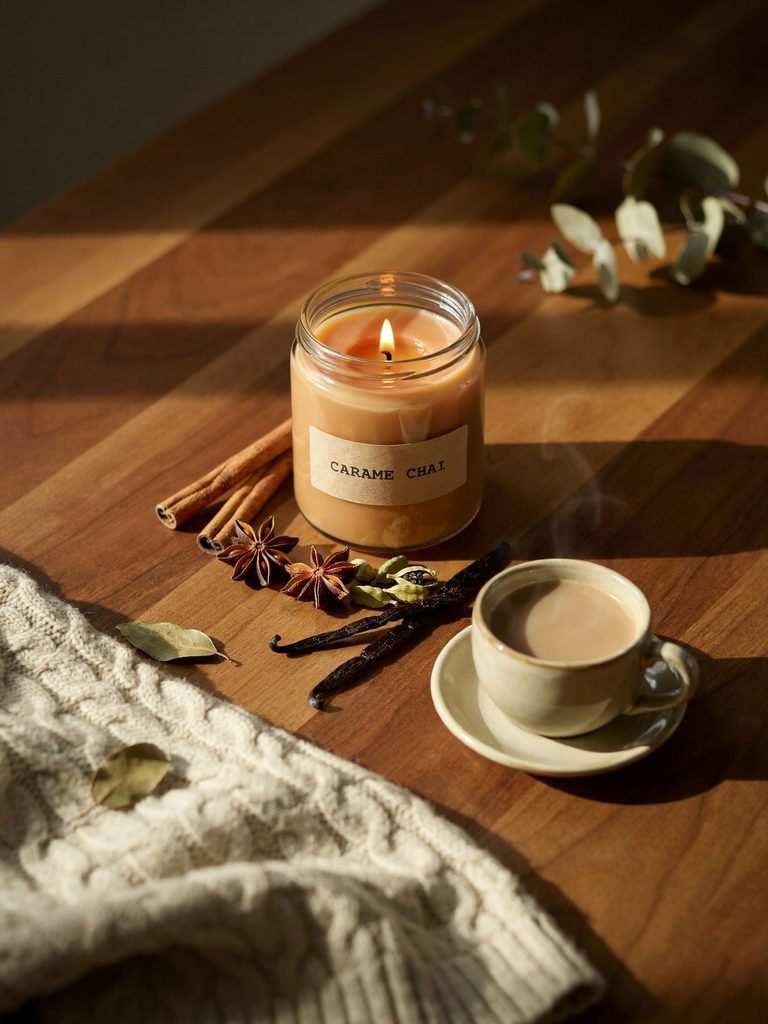
If you love warm drinks in autumn, this one is going to be a favorite.
Think creamy chai tea with caramel, vanilla, cinnamon, and a tiny hint of clove.
Scent profile
Chai + caramel + vanilla + cinnamon + clove
For 500 g wax at an 8% load:
- 16 g chai fragrance oil
- 10 g caramel fragrance oil
- 8 g vanilla fragrance oil
- 4 g cinnamon fragrance oil
- 2 g clove fragrance oil
The result should smell warm and spicy without allowing the clove to completely dominate.
A little blending trick
Strong spices can quickly take over a fragrance blend. When you’re working with cinnamon or clove, start conservatively and test your blend before committing to a large batch.
How to Make Any of These Fall Candles
Once you understand the basic process, you can use the same method for nearly all of these recipes.
Step 1: Prepare your container
Clean and completely dry your candle vessel.
Attach your wick to the center of the bottom using a wick sticker or appropriate candle adhesive.
Make sure the wick is positioned as close to the center as possible.
Step 2: Measure your wax
Use your digital scale to measure the amount of wax you need.
For your first few candles, I recommend making small test batches rather than preparing a huge quantity.
Step 3: Melt the wax
Melt the wax using the temperature range recommended by the manufacturer.
Don’t guess at temperatures when your particular wax comes with specific instructions.
Step 4: Measure your fragrance
Calculate the fragrance load based on the wax weight.
For example:
500 g wax × 8% = 40 g fragrance
If you’re creating a blend, the combined weight of all fragrance oils should equal your total fragrance amount.
Step 5: Add the fragrance
Add your candle-safe fragrance at the temperature recommended for your wax and fragrance.
Stir gently and consistently so the fragrance becomes properly incorporated into the wax.
Step 6: Pour
Pour slowly into your prepared container.
Avoid splashing the sides of the jar.
Keep the wick centered while the candle cools.
Step 7: Allow it to cool
Place your candles somewhere clean and undisturbed.
Avoid moving them unnecessarily while they’re setting because this can contribute to imperfections in the finished surface.
Step 8: Trim the wick
Once the candle has completely hardened, trim the wick according to your wick supplier’s recommendation.
Step 9: Cure
Don’t rush straight to burning your candle.
Soy candles generally benefit from a curing period, and the ideal cure time varies by wax and formula. Some candle-making guides recommend roughly one to two weeks for soy candles, but your wax manufacturer’s instructions should take priority.
How to Make Your Fall Candles Smell Stronger
One of the biggest beginner mistakes is assuming that more fragrance oil equals more scent.
It doesn’t work that way.
Your scent throw depends on several factors, including:
- Wax type
- Fragrance oil
- Fragrance load
- Wick size
- Container diameter
- Pouring process
- Cure time
- Room size
- Burn conditions
Different fragrance oils also behave differently in wax. Some are naturally stronger, while others need to be blended with complementary notes.
If your candle smells weak when unlit
Give it more curing time first.
Then check whether you’re using a fragrance specifically formulated for candle making and whether your fragrance load is appropriate for your wax.
If your candle smells good cold but weak while burning
Your wick may not be producing enough heat to release the fragrance effectively, or the fragrance and wax combination may need further testing.
Don’t immediately add more fragrance.
If fragrance oil appears on the surface
You may be exceeding what your wax can properly hold, or there may be an issue with your formulation or mixing process.
Check your wax manufacturer’s maximum fragrance-load recommendation.
Fall Candle Safety Tips
Homemade candles are beautiful, but they are still candles—and that means the burning stage deserves just as much attention as the crafting stage.
Always use candle-safe fragrance
Not every scented oil is designed for candle making. Use fragrance products intended and documented for candle use, and follow the supplier’s usage and safety guidance.
Don’t add random kitchen ingredients
It may look beautiful to sprinkle dried herbs, spices, coffee grounds, flowers, or leaves into candle wax, but these materials can create unwanted burning behavior.
If you want the visual appearance of autumn ingredients, decorate the outside of the container instead.
Never leave a burning candle unattended
Keep burning candles away from children, pets, curtains, paper, and other flammable materials.
Test your candles
Before gifting or selling homemade candles, burn-test your formula.
The wax, wick, fragrance, vessel, and container diameter all work together, so changing even one component can change how the candle burns.
My Favorite Fall Fragrance Combinations
If you want to create your own blends instead of following a recipe, start with these combinations:
For something sweet:
Vanilla + caramel + maple
For something spicy:
Pumpkin + cinnamon + clove
For something fruity:
Apple + cranberry + orange
For something fresh:
Orange + cedarwood + vanilla
For something sophisticated:
Amber + sandalwood + cedarwood
For something cozy:
Coffee + vanilla + caramel
For something bakery-inspired:
Apple + cinnamon + vanilla
For something woodsy:
Cedarwood + amber + sandalwood
The easiest way to develop your own signature scent is to start with one main fragrance, add a complementary middle note, and finish with a smaller amount of a deeper base note.
How to Create a Beautiful Fall Candle Gift
These homemade candles make incredibly thoughtful gifts because you can personalize everything.
Choose a simple glass jar, add a pretty autumn-colored label, and tie a small ribbon around the container.
You could even create a mini collection:
Pumpkin Spice
Warm, sweet, and spicy.
Apple Cinnamon
Fresh, fruity, and comforting.
Vanilla Maple
Creamy, sweet, and indulgent.
Amber Cedar
Warm, woodsy, and sophisticated.
Place two or three small candles in a gift box with crinkle paper and a handwritten note.
It feels personal without requiring an expensive gift.
Tips for Getting a Beautiful Candle Finish
The scent is important, but we all want our homemade candles to look beautiful too.
For a clean, elegant aesthetic, try:
- Clear glass jars
- Amber jars
- Cream-colored vessels
- Matte white containers
- Simple black or brown labels
- Minimal typography
- Neutral ribbons
- Small wooden lids
- Kraft-paper packaging
For a feminine fall look, I love combining warm neutrals with soft blush, cream, muted terracotta, or dusty brown.
You don’t need to overload the candle with decorations. Sometimes a simple jar with a beautiful label looks much more expensive.
Common Fall Candle-Making Mistakes to Avoid
Using too much fragrance
More fragrance doesn’t automatically mean a stronger candle and can cause performance problems.
Guessing measurements
A scale gives you much more consistent results than teaspoons or random drops.
Using the wrong fragrance
Make sure the fragrance is suitable for candle making.
Choosing a wick randomly
Wick size needs to match the wax, fragrance, vessel diameter, and formula.
Skipping burn testing
A candle can look perfect and still need adjustments to burn properly.
Burning it too soon
Give the candle the appropriate curing time before judging its final performance.
Adding combustible decorations to the wax
Keep decorative autumn ingredients outside the burn area.
Final Thoughts
Making fall-scented candles at home is one of those little DIY projects that feels both creative and practical. You aren’t simply making something pretty you’re creating a fragrance that can change the atmosphere of an entire room.
Start with one recipe rather than trying to make everything at once.
Pumpkin spice is a wonderful first project if you love traditional fall fragrances, while apple cinnamon is perfect if you prefer something fruity and familiar. For something more sophisticated, try amber and cedarwood. And if you have a serious sweet tooth, vanilla maple or caramel chai will make your home smell absolutely delicious.
The best part is that once you understand fragrance ratios, wax, wicks, and the basic candle-making process, you can begin creating your own signature combinations.
So put on your favorite cozy sweater, clear a little space on the kitchen counter, choose a beautiful fall fragrance, and enjoy the process. There is something so special about lighting a candle you made with your own hands and watching that soft glow make your home feel just a little more like autumn.