Beginner Easy Crochet Washcloth Pattern
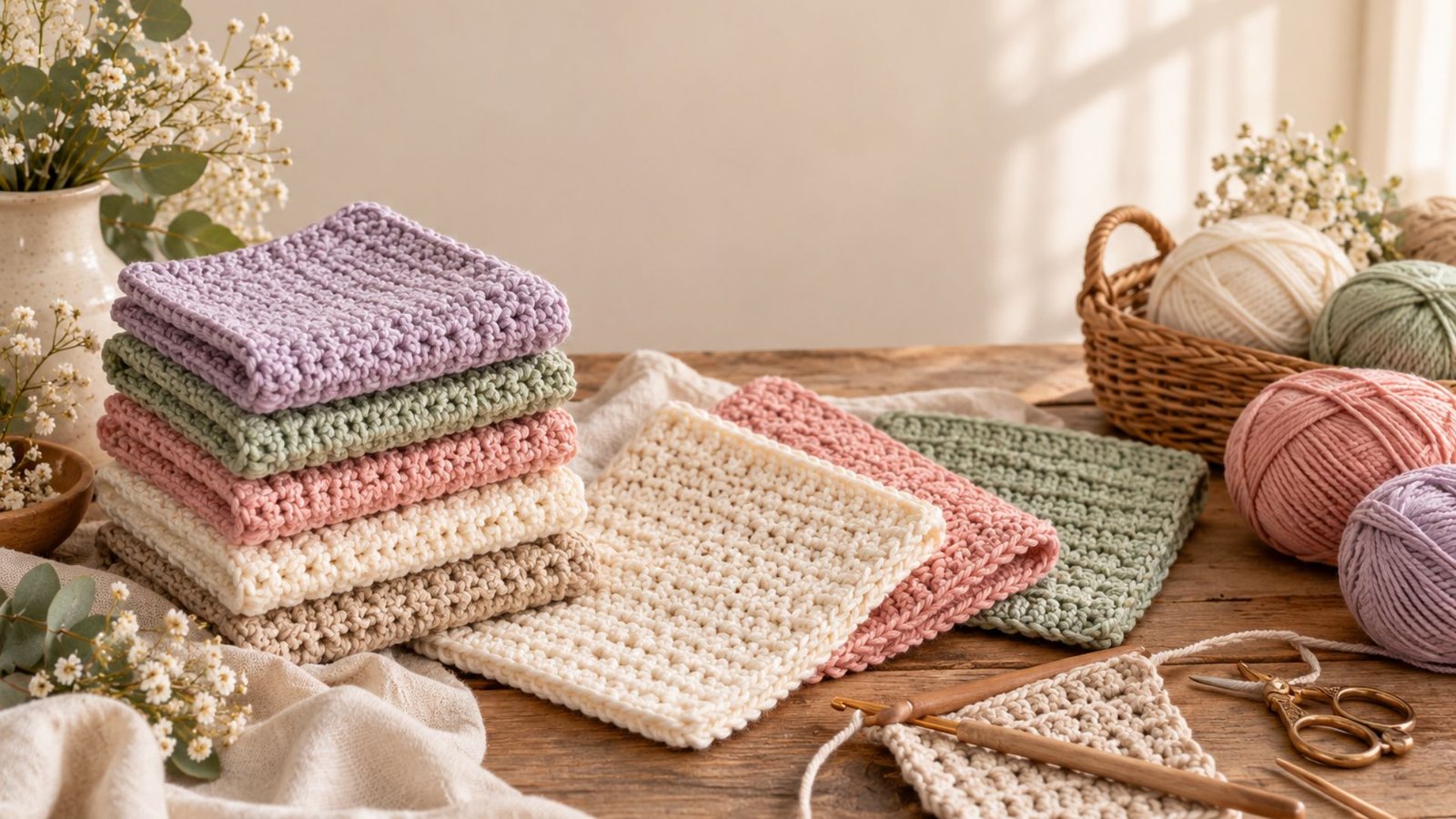
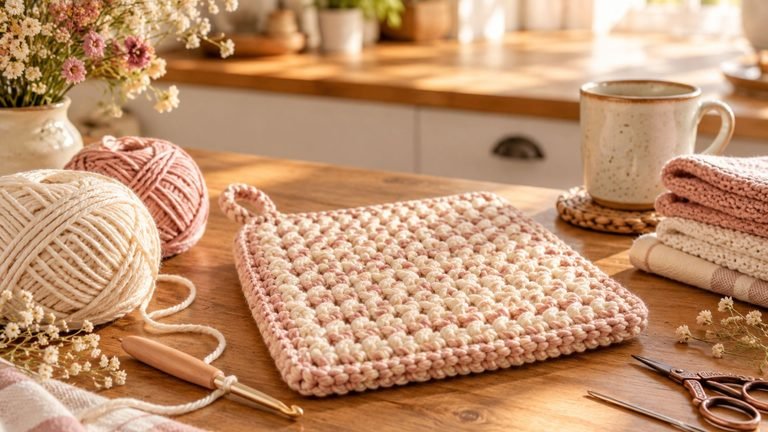
I have always loved simple crochet projects that are both pretty and useful, and a handmade washcloth is one of my favorite little things to make.
It is quick enough to finish in an afternoon, uses very little yarn, and makes such a sweet handmade addition to the kitchen or bathroom.
If you are new to crochet, this easy washcloth pattern is a lovely place to begin. The stitches are simple, the rows are easy to follow, and you can practice your tension without feeling overwhelmed.
I also love making a few in soft neutral or pastel colors because they look beautiful stacked together or tied with ribbon as a thoughtful handmade gift.
Why You’ll Love This Easy Crochet Washcloth
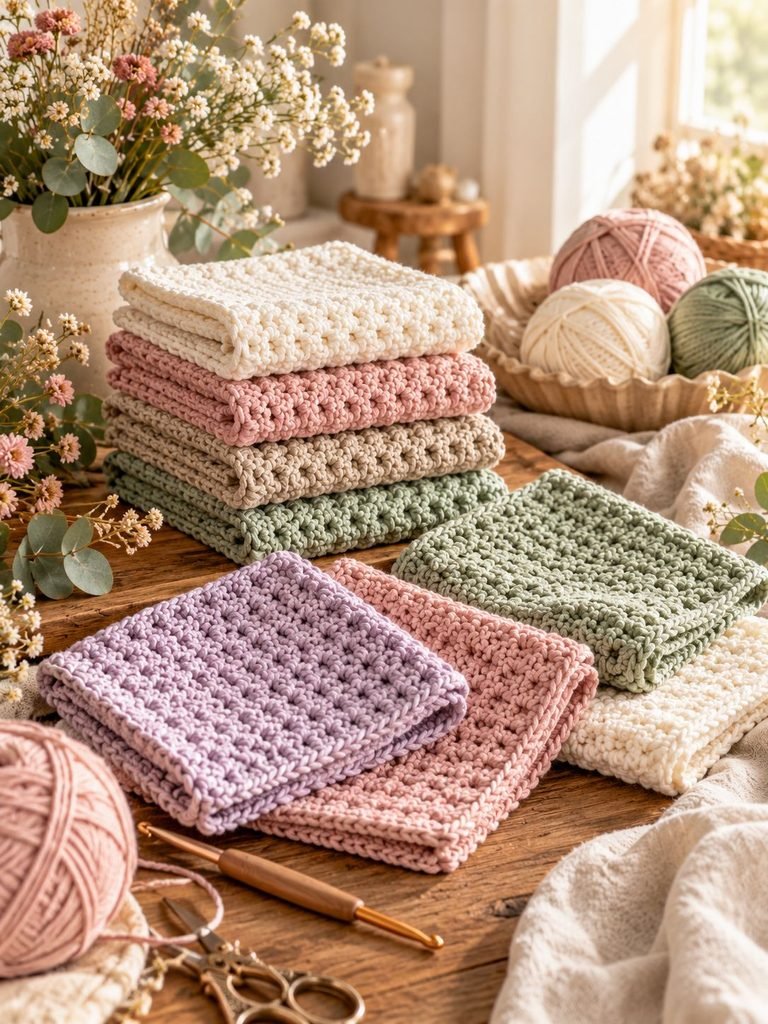
If you are looking for a crochet project that does not require complicated stitches or lots of supplies, this washcloth is a wonderful choice.
Here are a few reasons I love this pattern:
- It is beginner-friendly: You only need basic crochet skills.
- It works up quickly: You can usually finish one washcloth in a short amount of time.
- It uses very little yarn: It is perfect for using leftover cotton yarn.
- It is practical: Unlike many decorative crochet projects, you can actually use this one every day.
- It makes a lovely gift: Pair a few washcloths with handmade soap, candles, or bath products.
- It is easy to customize: You can change the size, color, or border to make it your own.
This pattern is also a great way to practice keeping your stitches even. Once you become comfortable with the basic rows, you can make several washcloths without having to constantly look at the instructions.
Materials You’ll Need
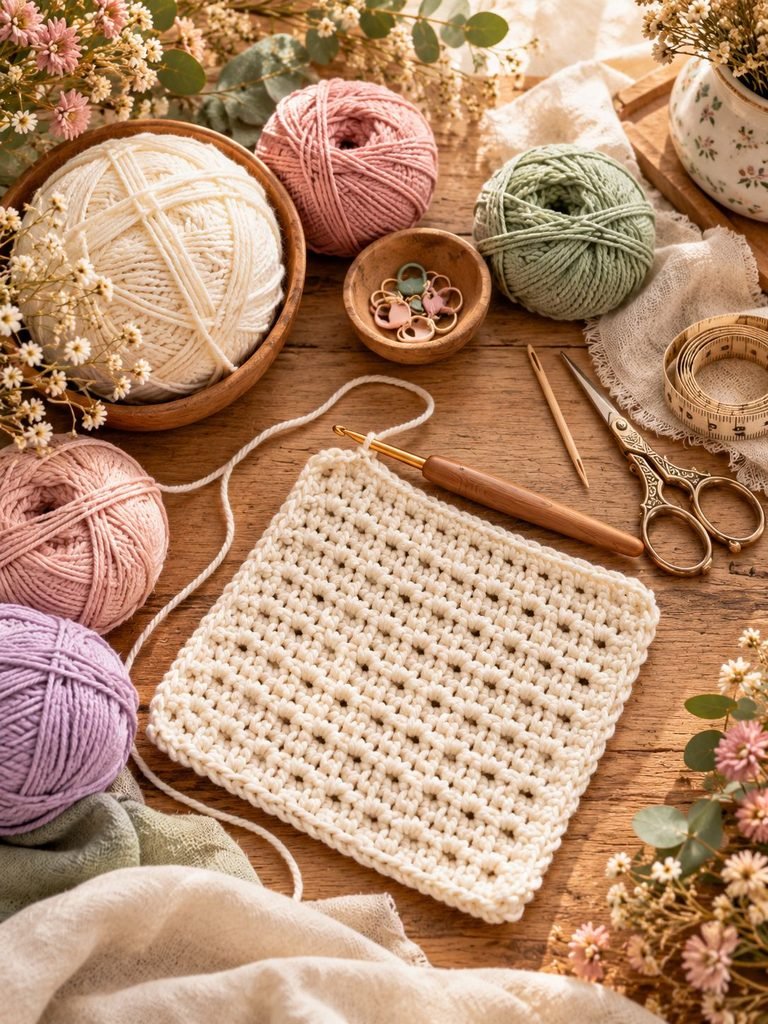
You only need a few basic supplies for this project.
Cotton Yarn
I recommend using 100% cotton yarn for crochet washcloths. Cotton is absorbent, durable, washable, and holds up well to regular use.
Choose a worsted-weight or medium-weight cotton yarn for an easy beginner project.
A soft cream, oatmeal, blush pink, sage green, dusty blue, or lavender would look beautiful, but you can use absolutely any color you love.
Crochet Hook
For medium-weight cotton yarn, a 5 mm crochet hook is a good starting point.
Always check the yarn label, though, because recommended hook sizes can vary slightly between yarn brands.
Scissors
A small pair of sharp scissors will make cutting your yarn clean and easy.
Yarn Needle
You will need a yarn needle to weave in the loose ends when you finish.
Optional Measuring Tape
A measuring tape is helpful if you want your washcloth to be a specific size.
Crochet Abbreviations
Before starting, it helps to become familiar with the basic abbreviations used in the pattern.
- ch – chain
- sc – single crochet
- st – stitch
- sl st – slip stitch
- rep – repeat
This pattern is intentionally simple, so you will not need to learn a long list of complicated stitches.
Finished Washcloth Size
The finished washcloth will be approximately 8 x 8 inches, depending on your yarn, hook size, and tension.
Don’t worry if yours ends up slightly smaller or larger.
One of the nicest things about handmade crochet is that small differences are completely normal. If you want a larger washcloth, simply continue adding rows until you reach your preferred size.
Before You Start: Understanding Crochet Tension
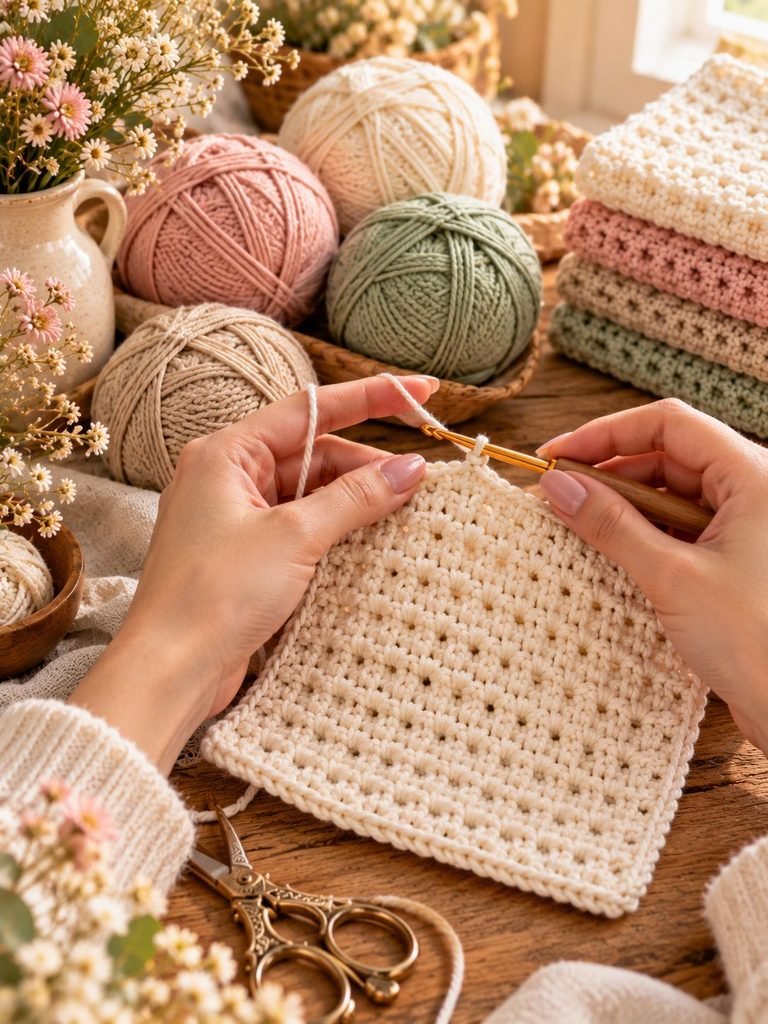
If you are completely new to crochet, you may notice that your first few rows feel either very tight or very loose.
That is normal.
Your tension is simply how tightly or loosely you hold the yarn while crocheting.
Try not to pull your stitches too tightly. You want your hook to move comfortably through the stitches without having to force it.
If your washcloth feels stiff and difficult to work into, your tension may be too tight. If the fabric looks very loose and has large spaces between the stitches, you may be crocheting too loosely.
With practice, your tension will naturally become more consistent.
How to Make a Beginner Crochet Washcloth
Step 1: Make Your Foundation Chain
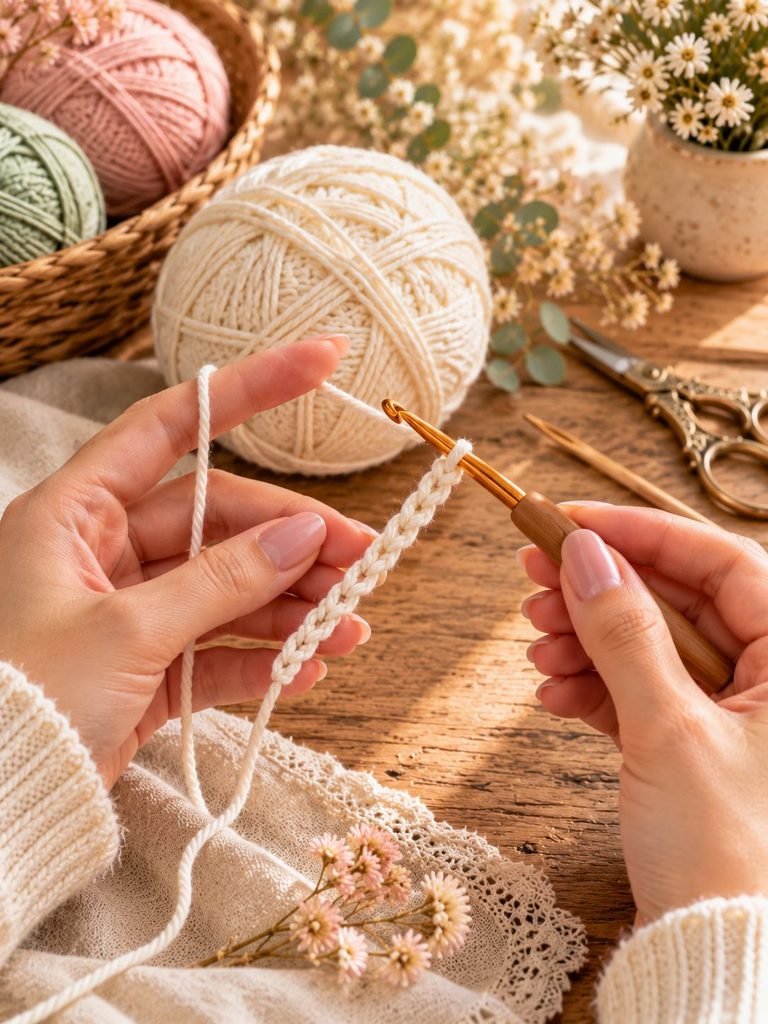
Start by making a slip knot and placing it on your crochet hook.
Chain 31 stitches.
This foundation chain will determine the width of your washcloth.
Try to keep your chain stitches fairly loose. A very tight foundation chain can cause the bottom edge of your washcloth to pull inward.
If you find that you naturally crochet tightly, you can use a slightly larger hook just for the foundation chain.
Step 2: Work the First Row
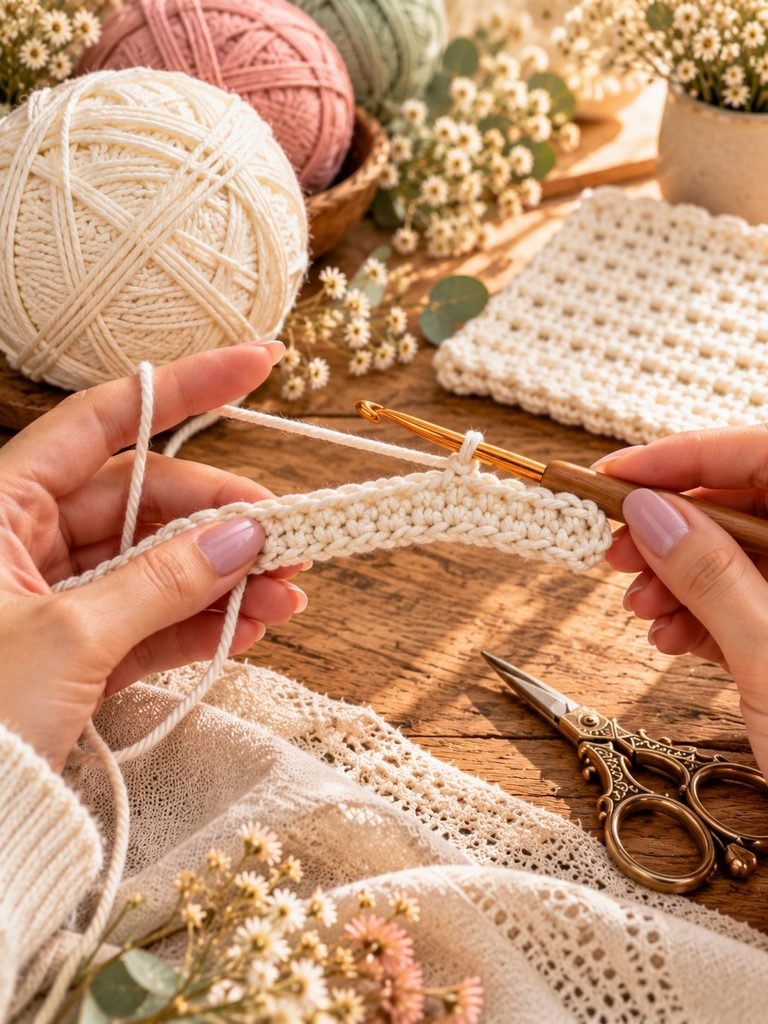
Insert your hook into the second chain from the hook.
Yarn over and pull up a loop.
You should now have two loops on your hook.
Yarn over again and pull through both loops.
You have made your first single crochet.
Continue making one single crochet in each chain across the row.
When you reach the end, you should have 30 single crochet stitches.
Chain 1 and turn your work.
The chain 1 at the beginning of the row acts as your turning chain. For this simple pattern, it does not count as a stitch.
Step 3: Work the Second Row
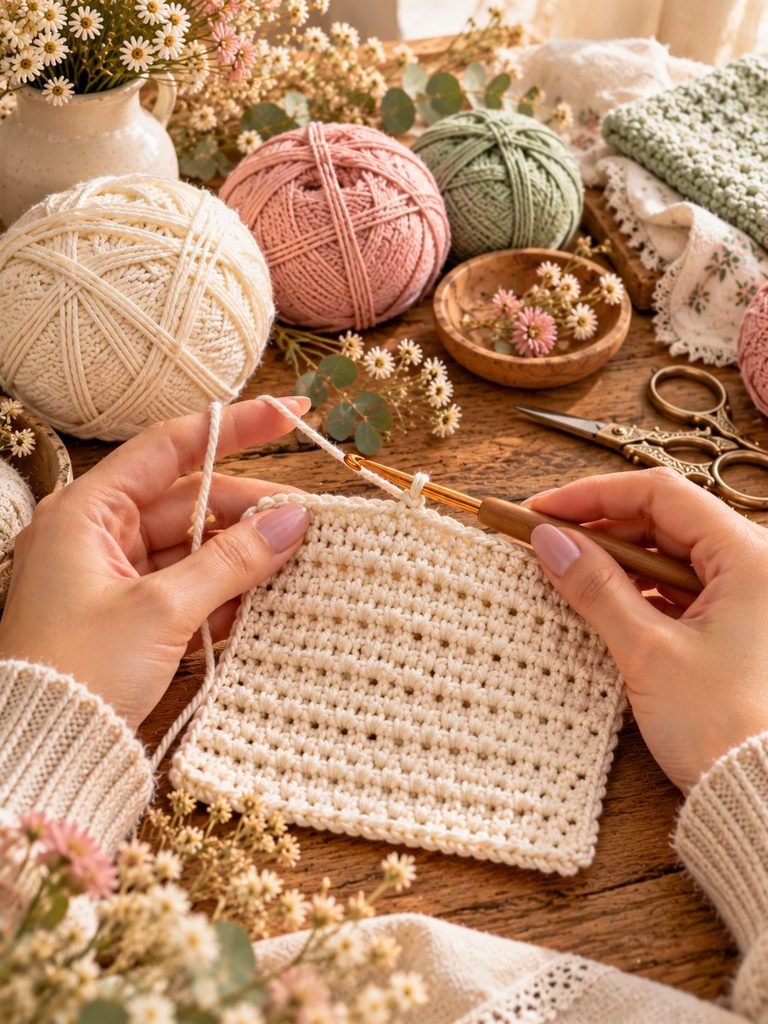
Now you are ready to begin the second row.
Insert your hook into the first stitch.
Make one single crochet.
Continue working one single crochet into every stitch across the row.
When you reach the end, chain 1 and turn.
You should still have 30 stitches.
Read The All-Purpose Waffle Stitch Crochet Dishcloth Pattern
Step 4: Continue the Pattern
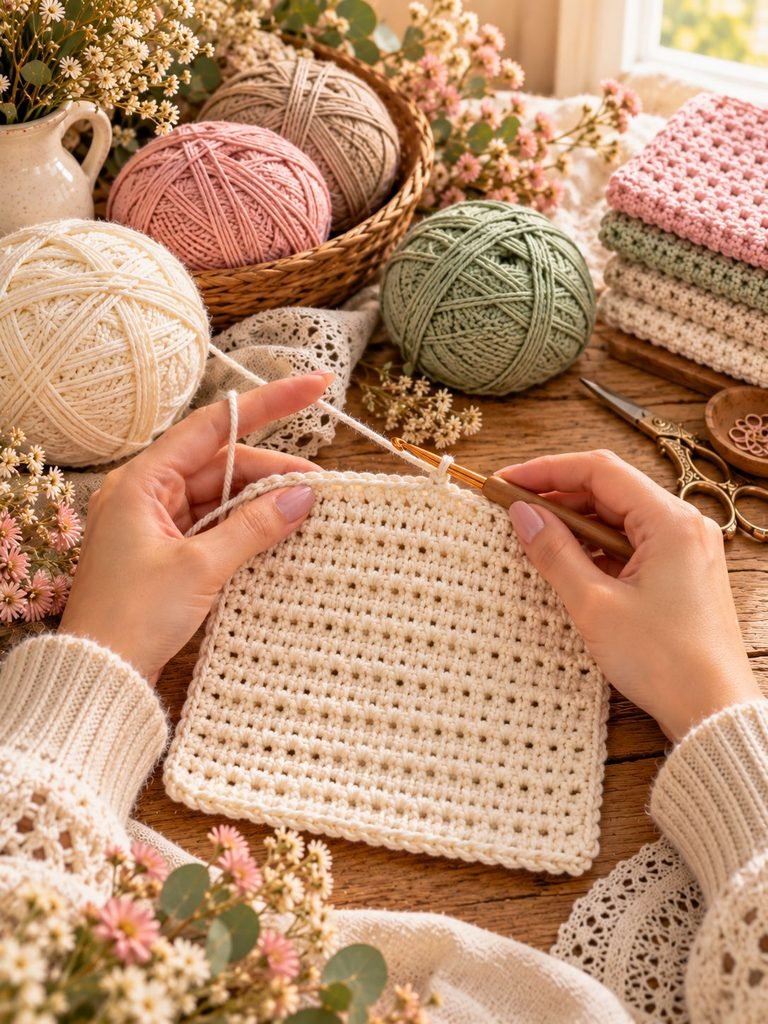
Now simply repeat the same row.
For each row:
- Chain 1.
- Turn your work.
- Make one single crochet in each stitch across.
- Chain 1.
- Turn.
- Repeat.
Continue until your washcloth is approximately as tall as it is wide.
For this pattern, you will usually need around 30 rows, although your exact number may vary depending on your tension.
The important thing is not the exact number of rows. Instead, focus on creating a square shape.
How to Keep Your Edges Straight
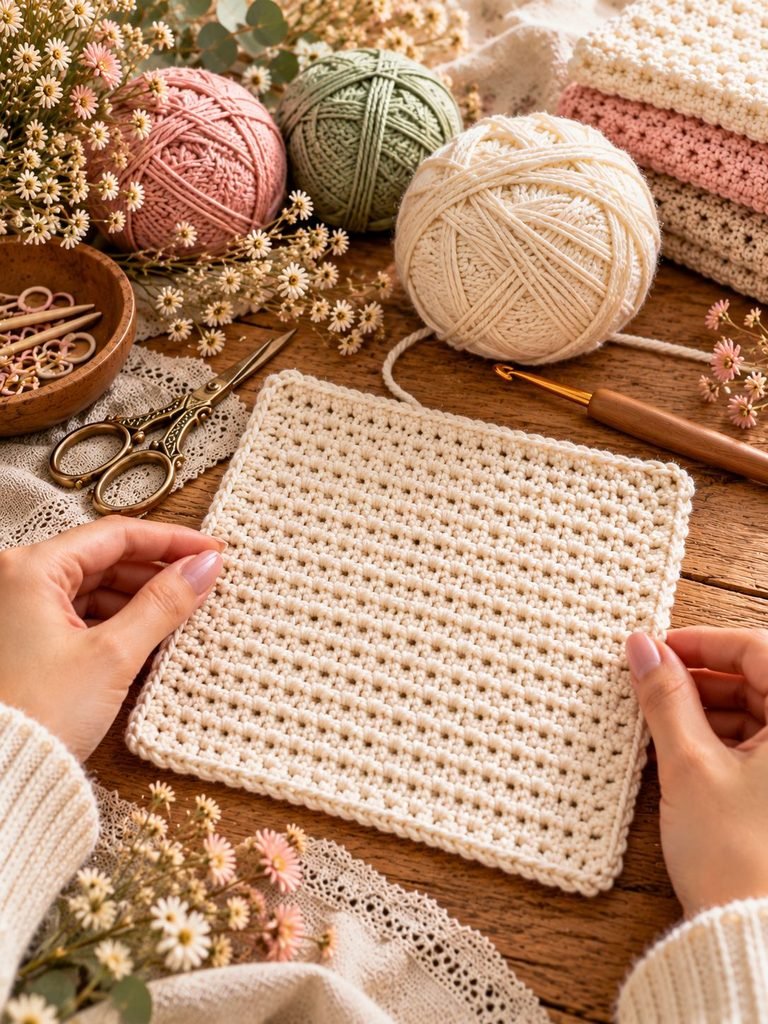
One of the most common problems beginners have with crochet is ending up with a piece that gets narrower or wider as they work.
Don’t worry this happens to almost everyone when learning.
The most important thing is to make sure you are working into the first and last stitch of every row.
Before turning your work, count your stitches occasionally.
You should have 30 stitches in every row.
If you suddenly have 29 stitches, you may have accidentally skipped the last stitch.
If you have 31 stitches, you may have crocheted into a turning chain or accidentally worked two stitches into the same stitch.
Taking a few seconds to count your stitches can save you from having to unravel several rows later.
How to Tell Where Your Row Ends
The last stitch can sometimes be difficult for beginners to see.
Look carefully along the top edge of your row. Each stitch looks like a small “V.”
When you reach the end, make sure your hook goes underneath both loops of the final stitch.
If you accidentally skip that stitch, your washcloth will slowly become narrower.
A simple trick is to place a stitch marker into the first stitch of every row. This can make it much easier to identify where your row begins and ends.
Creating the Perfect Washcloth Shape
As you crochet, occasionally lay your washcloth flat on your table.
Look at its shape.
Is it roughly square?
Are the sides straight?
Are the corners even?
If everything looks good, keep going.
If you notice that one side is becoming noticeably narrower, check your stitch count before continuing.
Don’t feel discouraged if your first washcloth isn’t perfectly square. Your first project is also practice, and your crochet skills will improve with every row.
Finishing Your Washcloth
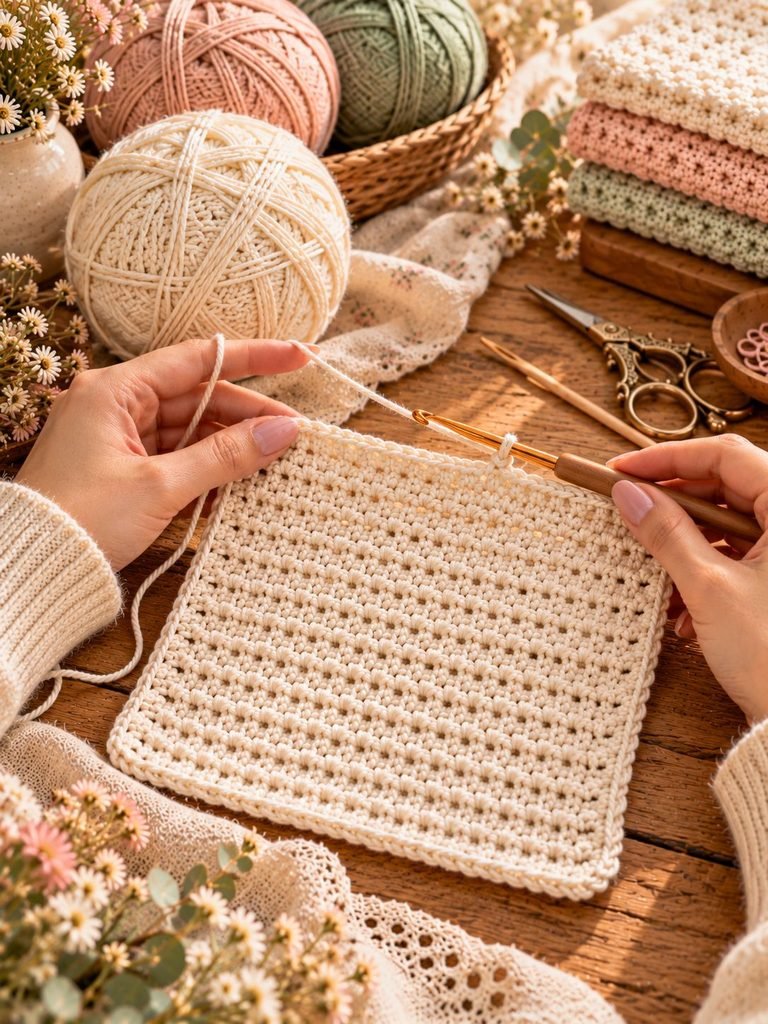
Once your washcloth has reached approximately 8 inches tall, you are ready to finish.
Work your final row of single crochet.
Then cut your yarn, leaving a tail of approximately 5–6 inches.
Pull the yarn through the final loop on your hook.
Gently tighten it to secure your work.
You now have a finished crochet washcloth!
But there is still one important step.
How to Weave in the Ends
Use your yarn needle to weave the loose yarn tail into the back of your washcloth.
Thread the yarn through the needle and carefully weave it back and forth through several stitches.
Try changing direction once or twice so the yarn stays secure.
Once the end is safely woven in, trim off the excess yarn.
Repeat this process with the other loose end.
Taking the time to properly weave in your ends will make your finished washcloth look much neater and help prevent it from unraveling.
Optional: Add a Simple Border
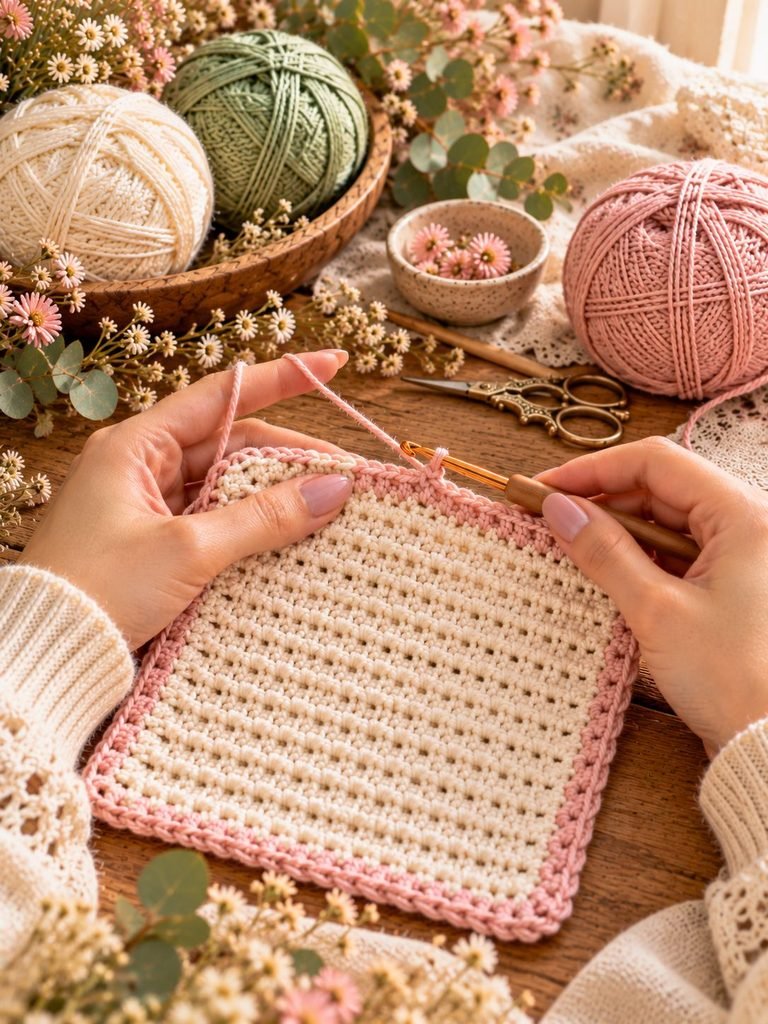
Your washcloth is perfectly usable without a border, but adding one can give it a beautiful finished appearance.
A simple single crochet border is especially easy for beginners.
Start in one corner and work single crochet stitches evenly around the outside edge.
When you reach a corner, you can make 3 single crochet stitches into the corner stitch.
This helps the corner turn neatly without pulling or bunching.
Continue around all four sides.
When you reach the starting point, join with a slip stitch.
Cut your yarn, fasten off, and weave in the end.
For a subtle look, use the same color yarn.
For something a little more decorative, choose a contrasting shade.
A cream washcloth with a blush pink border would be especially pretty, while sage green and oatmeal would create a soft cottage-inspired look.
Easy Ways to Customize Your Washcloth
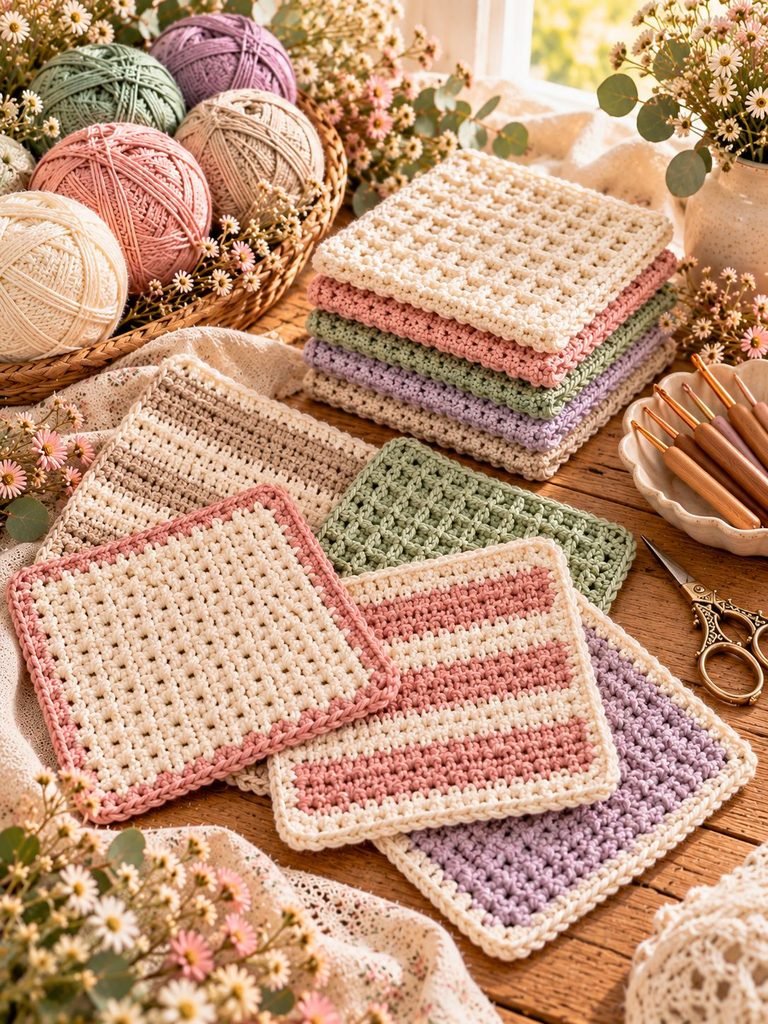
One of the best things about this simple pattern is how easy it is to change.
Change the Color
Make every washcloth in a different color.
A soft coordinated palette can make a set look especially beautiful.
Try:
- Cream
- Oatmeal
- Blush pink
- Dusty rose
- Sage green
- Soft lavender
Make It Larger
Want a larger washcloth?
Simply add more stitches to your foundation chain and continue working rows until you reach the size you want.
For example, you can start with 35 or 41 chains for a larger square.
Just remember that the number of stitches should remain consistent across each row.
Make It Smaller
For a smaller washcloth or face cloth, use fewer foundation chains.
This is a great option if you want to make smaller handmade spa cloths.
Add Stripes
Stripes are another easy way to make this pattern more interesting.
You can change colors every few rows to create simple horizontal stripes.
Try alternating cream and blush, oatmeal and sage, or white and lavender.
How to Wash Crochet Cotton Washcloths
Because washcloths are designed to be used regularly, proper care is important.
Always check the care instructions on your yarn label first.
In general, cotton washcloths can be washed with warm or cool water.
Avoid using extremely hot water unless the yarn label specifically recommends it, as repeated high heat can cause some cotton projects to shrink.
After washing, reshape your washcloth and allow it to dry completely.
Do not store it while it is damp because moisture can create an unpleasant smell and encourage mildew.
How to Make a Set of Crochet Washcloths
Once you finish one washcloth, you may find yourself wanting to make an entire set.
I certainly understand the temptation!
Making several at once is actually a great way to practice because you don’t have to learn a new pattern each time.
You can make a set of three, four, or six washcloths in coordinating colors.
For a beautiful handmade gift, fold the washcloths neatly and tie them together with a simple piece of twine or ribbon.
You could also place them inside a small basket with handmade soap, bath salts, or a candle.
It is such a simple gift, but it feels thoughtful because you made it yourself.
Common Beginner Crochet Mistakes
My Washcloth Is Getting Smaller
You are probably accidentally skipping stitches at the end of your rows.
Count your stitches and make sure you have 30 in every row.
My Washcloth Is Getting Wider
You may be accidentally making two stitches into one stitch.
Again, count your stitches regularly.
My Foundation Chain Is Too Tight
Try making your chain more loosely.
You can also use a crochet hook one size larger for the foundation chain.
My Fabric Feels Very Stiff
Relax your hands and avoid pulling the yarn tightly after every stitch.
Your stitches should be firm but still have a little flexibility.
My Edges Look Uneven
This is very common for beginners.
Make sure you are consistently working into the first and last stitch of each row.
A simple border can also help give the finished washcloth a more polished appearance.
Helpful Tips for First-Time Crocheters
If this is your first crochet project, give yourself permission to take your time.
You do not need to crochet quickly.
Focus on learning how each stitch works and getting comfortable holding the yarn and hook.
If you make a mistake, don’t panic.
Simply pull out the stitches back to the place where the mistake happened and try again.
It is much better to fix a small mistake early than to continue crocheting while hoping it will somehow disappear.
And remember, your first washcloth does not need to look perfect.
Every handmade project has little imperfections, and honestly, I think that is part of its charm.
Frequently Asked Questions
What is the best yarn for crochet washcloths?
100% cotton yarn is usually the best choice because it is absorbent, durable, washable, and practical for everyday use.
What crochet hook size should I use?
A 5 mm crochet hook works well with many medium-weight cotton yarns. However, always check your yarn label for its recommended hook size.
How long does it take to crochet a washcloth?
For a beginner, it may take a few hours depending on your speed and comfort level. Once you become more familiar with the stitches, you can make one much more quickly.
Can I use acrylic yarn?
You can, but cotton is generally more suitable for a washcloth because of its absorbency and durability.
Can I make this washcloth bigger?
Absolutely. Simply start with a longer foundation chain and continue crocheting rows until you reach your preferred size.
Do I need to add a border?
No. A border is completely optional. The simple single crochet fabric looks lovely on its own.
Is this pattern suitable for complete beginners?
Yes. If you know how to make a slip knot, chain, and single crochet, you can make this washcloth.
Final Thoughts
Simple crochet projects are some of my favorites because they remind me that handmade does not have to mean complicated.
This beginner washcloth uses basic stitches, a small amount of yarn, and a little patience to create something you can actually use every day.
Once you finish your first one, try making another in a different color or adding a simple border.
Before long, you may have a beautiful little collection of handmade washcloths ready for your own home or to give as thoughtful gifts. So grab your favorite cotton yarn, pick up your hook, and enjoy a quiet afternoon of crocheting something useful and beautiful.