15 Plastic-Free DIY Christmas Gifts for a Sustainable Holiday
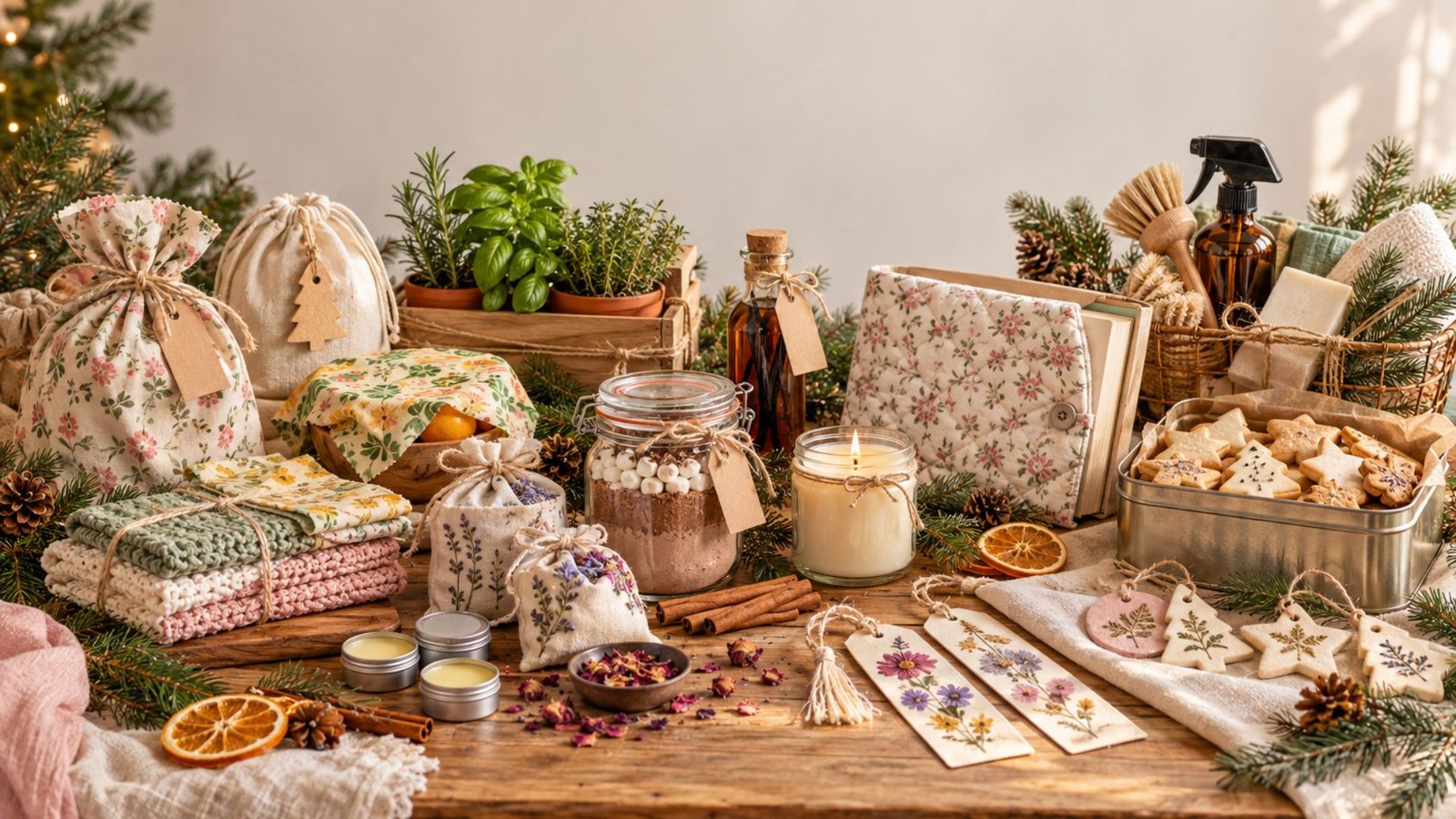
Christmas has always felt extra special to me when I can slow down, get creative, and make something thoughtful for the people I love.
There is something so lovely about turning simple, natural materials into beautiful little gifts that feel personal and meaningful.
This year, I wanted to explore more ways to make the holidays special without relying on plastic packaging, disposable decorations, or store-bought gifts that are quickly forgotten.
These plastic-free DIY Christmas gifts are a wonderful place to start. Whether you love sewing, crafting, baking, or creating cozy handmade treasures, you will find plenty of ideas to make someone smile.
Shop my amazon essential
- Beeswax Pellets
- Cotton Fabric
- Cotton Twine
- Glass Jars with Lids
- Soy Wax Flakes
- Candle-Making Kit
- Cotton Yarn
- Wooden Craft Tools
- Dried Flowers
- Christmas Cookie Cutters
Why Choose Plastic-Free DIY Christmas Gifts?

The holidays are a time for generosity, but they can also create a surprising amount of waste. Between shiny wrapping paper, plastic ribbons, disposable decorations, and gifts wrapped in layers of packaging, it is easy to accumulate more waste than we realize.
Making your own plastic-free Christmas gifts is a lovely way to celebrate more thoughtfully. Instead of buying something mass-produced, you can create something useful, beautiful, and personal with materials you may already have at home.
Here are a few reasons to try plastic-free gifting this Christmas:
- Less unnecessary waste: Choose reusable, natural, or recyclable materials instead of disposable plastic.
- More meaningful presents: Handmade gifts show that you have invested time, care, and thought into someone special.
- Budget-friendly crafting: Many projects use inexpensive supplies, pantry ingredients, fabric scraps, or materials you already own.
- Useful everyday items: From reusable kitchen cloths to homemade body scrubs, these gifts can become part of someone’s daily routine.
- A more intentional holiday: Making gifts encourages you to slow down and enjoy the creative side of Christmas.
One important thing to remember is that plastic-free does not automatically mean sustainable. Natural materials can still require significant resources, and some homemade products may have a shorter lifespan than well-made alternatives. Whenever possible, reuse what you have, avoid unnecessary purchases, and choose materials that will last.
1. Handmade Beeswax Food Wraps
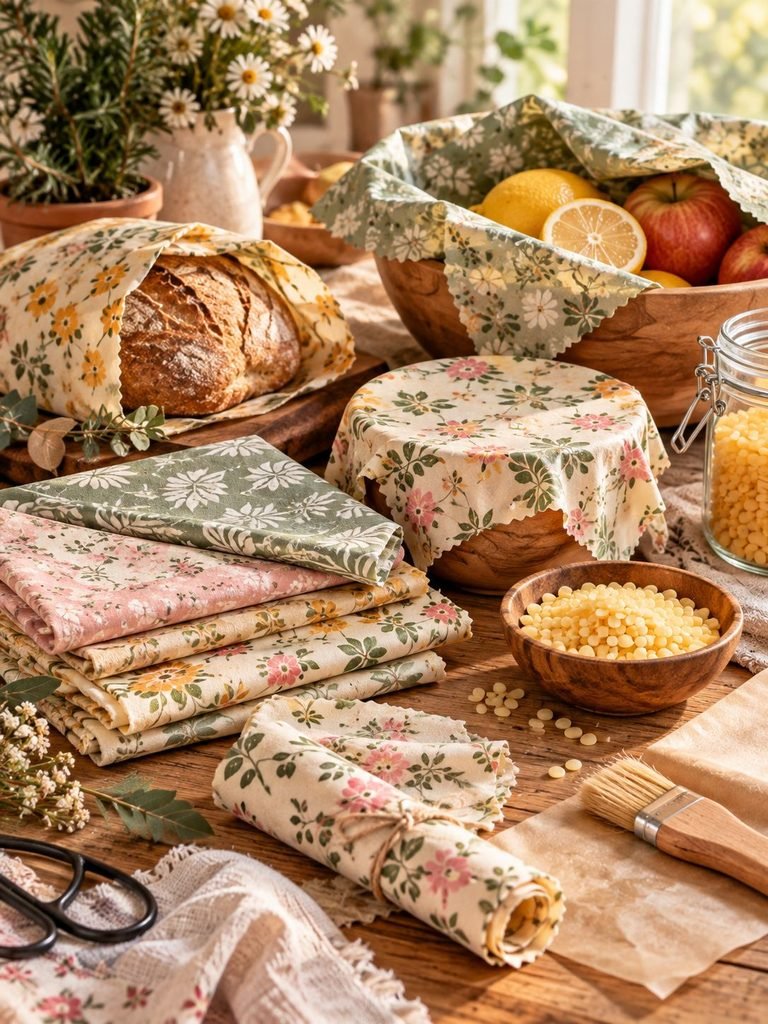
Reusable beeswax wraps are a practical gift for anyone who enjoys cooking, packing lunches, or keeping leftovers fresh. They can replace many uses of disposable plastic wrap and are surprisingly simple to make at home.
What You Will Need
- Clean cotton fabric, preferably lightweight and tightly woven
- Beeswax pellets or grated beeswax
- Baking parchment
- An old baking tray
- Scissors
- A dedicated craft brush, if needed
How to Make Them
- Wash and thoroughly dry your cotton fabric to remove any dirt or residues.
- Cut the fabric into different sizes, such as small squares for fruit and larger rectangles for bowls or sandwiches.
- Place a piece of baking parchment on a baking tray and lay the fabric on top.
- Sprinkle a thin, even layer of beeswax over the fabric.
- Warm it in a low oven, around 80–95°C (175–200°F), watching carefully until the wax melts into the fabric.
- Lift the fabric carefully by its corners and allow the excess wax to drip away.
- Hang it up or lay it flat to cool completely.
Fold the finished wraps into a neat bundle and tie them with cotton string.
Sustainable tip: Use leftover cotton fabric where possible. Beeswax wraps are not suitable for raw meat, and they should generally be washed with cool water and mild soap rather than hot water. They are also unsuitable for people who need vegan products or have relevant bee-product allergies.
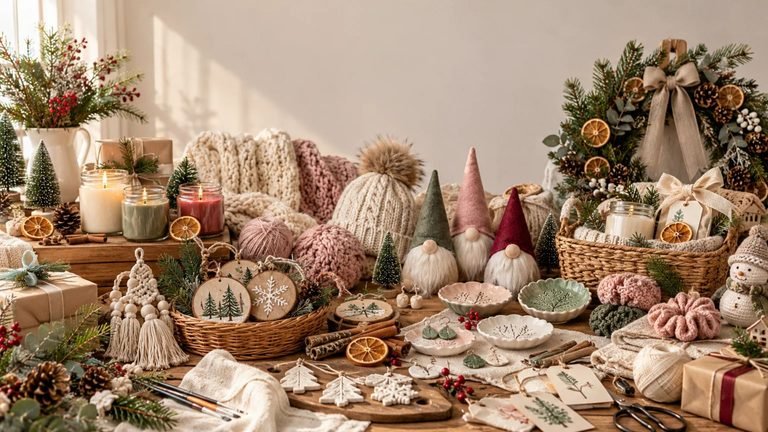
Read 15 DIY Christmas Ornament Ideas That Look Beautifully Handmade and Cozy
2. Homemade Christmas Scented Candles
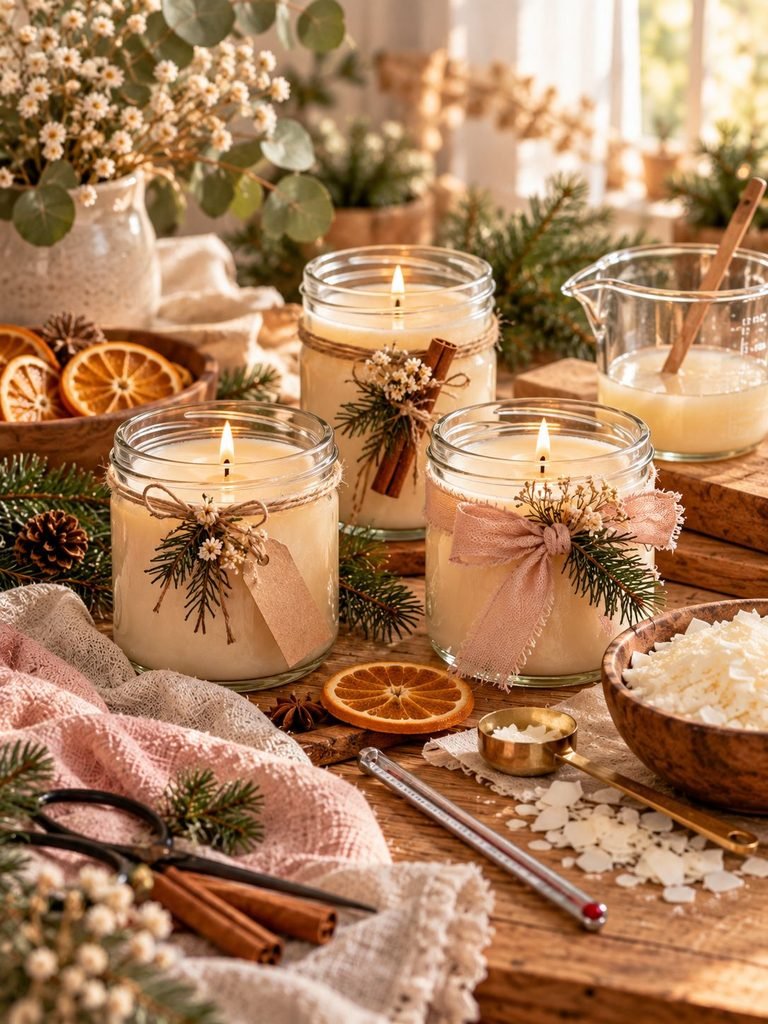
A handmade candle is a lovely gift for someone who enjoys a cozy evening, a relaxing bath, or a softly scented living room. Choosing a reusable glass container and carefully selected ingredients can make this present feel both elegant and thoughtful.
What You Will Need
- Soy wax or another suitable candle wax
- A candle-safe wick
- A clean, heat-resistant glass container
- A thermometer
- A double boiler or suitable wax-melting setup
- Candle-safe fragrance, if desired
- A wick holder
How to Make Them
- Clean and completely dry your glass container.
- Secure the wick in the center of the bottom using a suitable wick sticker or adhesive.
- Melt the wax according to the supplier’s instructions using a double boiler.
- Monitor the temperature and add fragrance only if you are using a product specifically formulated for candle-making and the wax manufacturer’s guidance permits it.
- Carefully pour the wax into the container.
- Keep the wick centered while the candle cools.
- Allow the candle to cure for the period recommended for your wax and fragrance combination.
- Trim the wick to the candle manufacturer’s recommended length before gifting.
Decorate the container with a reusable ribbon or a simple paper label.
Sustainable tip: Choose a sturdy container that can be reused, and avoid plastic glitter, synthetic decorative fillers, and unnecessary packaging. Never add dried flowers, leaves, or other combustible decorations near the candle’s flame. Test the candle before gifting it, and include safe-burning instructions.
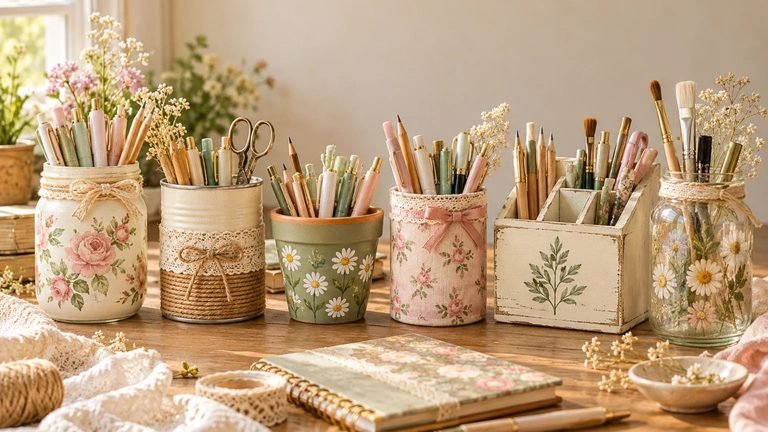
Read 6 DIY Cottage Pen Holder Ideas to Make Your Desk Feel Cozy and Beautiful
3. Reusable Fabric Gift Bags

One of my favorite ways to make Christmas gifting more sustainable is to make the packaging part of the present itself. Fabric gift bags are attractive, easy to sew, and can be reused for birthdays, holidays, and other special occasions.
What You Will Need
- Cotton, linen, or other suitable fabric
- Fabric scissors
- A sewing machine or needle and thread
- Cotton cord or fabric ties
- Pins or sewing clips
- An iron
How to Make Them
- Cut two matching rectangles of fabric, allowing extra room for the seams.
- Place the pieces together with their right sides facing each other.
- Sew along both sides and the bottom, leaving the top open.
- Fold the top edge inward to create a neat channel for the drawstring, then stitch it in place.
- Turn the bag right side out.
- Thread cotton cord through the channel and knot the ends.
- Press the bag gently and add a simple fabric tag if you wish.
Make a few different sizes so the recipient can use them for everything from jewelry to books.
Sustainable tip: Old cotton shirts, curtains, pillowcases, and leftover sewing fabric can work beautifully. If you do not sew, use a clean fabric square and tie the corners together around the gift.
4. Homemade Sugar Scrub in a Reusable Glass Jar
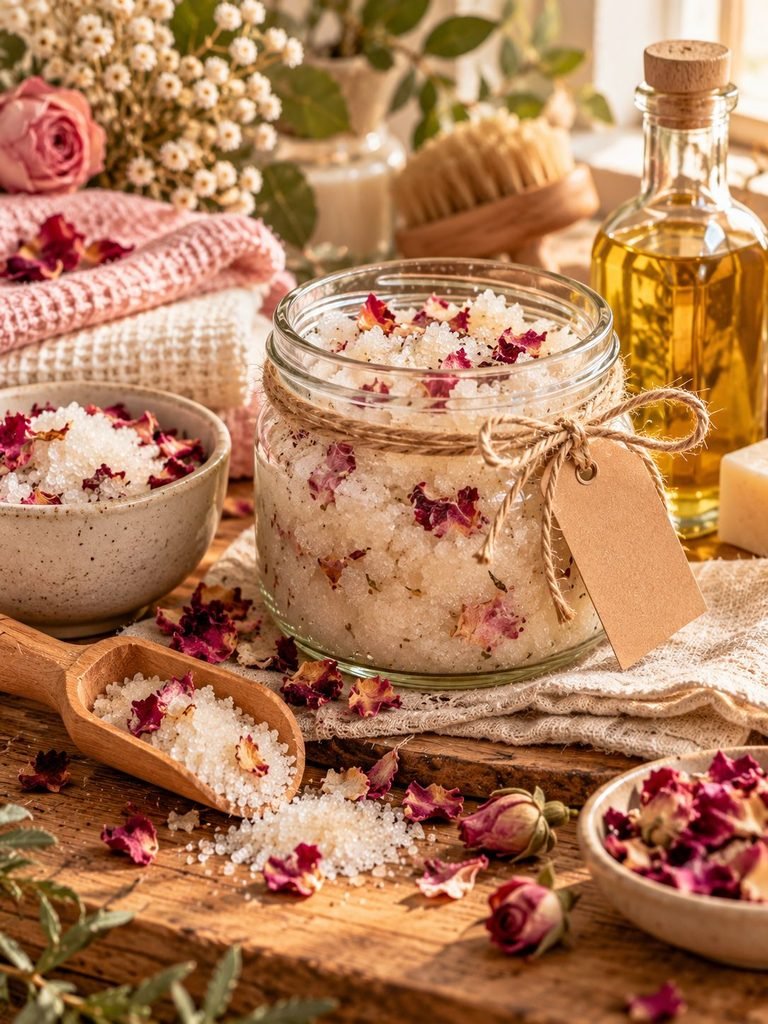
A homemade sugar scrub can make a sweet little self-care gift, especially when presented in a clean glass jar with a handwritten label. It is inexpensive, simple to prepare, and easy to personalize.
What You Will Need
- 1 cup granulated sugar
- Approximately ¼ cup of a suitable cosmetic-grade carrier oil, such as sunflower oil
- A clean, completely dry glass jar with a lid
- A spoon
- A paper label and cotton string
How to Make It
- Add the sugar to a clean mixing bowl.
- Slowly stir in the oil until the mixture has a damp, scoopable texture.
- Add a little more sugar if the scrub feels too oily.
- Transfer the mixture to the clean, dry jar using a clean spoon.
- Close the lid and attach a label listing the ingredients and preparation date.
- Add a small note explaining how to use it.
For a simple festive touch, choose a jar with a lovely shape and tie a small cotton bow around the lid.
Sustainable tip: Skip plastic microbeads, glitter, and unnecessary artificial colorants. Do not add fresh fruit, water, or other perishable ingredients. Make small batches, keep water out of the jar, and advise the recipient to discard the scrub if its smell, color, or texture changes.
Because oils can make bathroom surfaces slippery, the scrub should be used carefully and kept away from the eyes, irritated skin, and sensitive areas. Avoid gifting it to someone with known ingredient allergies without checking first.
5. Hand-Knitted or Crocheted Dishcloths

For the friend who appreciates practical gifts, handmade dishcloths are a wonderful choice. They are useful, washable, and can be made in almost any color to match a kitchen.
What You Will Need
- 100% cotton yarn
- Knitting needles or a crochet hook appropriate for the yarn
- Scissors
- A yarn needle
How to Make Them
- Choose a washable cotton yarn designed for repeated household use.
- Cast on a suitable number of stitches for knitting or create a starting chain for crochet.
- Work in a simple stitch pattern, such as garter stitch or single crochet.
- Continue until the cloth reaches your preferred size.
- Bind off or fasten off securely.
- Weave in all loose ends.
- Wash and dry the finished cloth according to the yarn’s care instructions.
Create a coordinated set of two or three cloths and tie them together with cotton twine.
Sustainable tip: Choose durable yarn that will hold up to frequent washing. Avoid decorative fibers that shed excessively, and remember that even natural fibers can release small particles during laundering.
6. Homemade Hot Chocolate Mix

A jar of homemade hot chocolate mix is a thoughtful gift for friends, teachers, neighbors, or anyone who enjoys a comforting winter drink. It is also an excellent option if you need to make several presents on a modest budget.
What You Will Need
- ½ cup unsweetened cocoa powder
- ½ cup powdered sugar, adjusted to taste
- 1 cup powdered milk, or a suitable dairy-free alternative
- A pinch of salt
- Optional ground cinnamon
- A clean, dry glass jar with a lid
How to Make It
- Sift the cocoa powder and powdered sugar into a bowl.
- Stir in the powdered milk and salt until evenly combined.
- Add a small pinch of cinnamon if you like a warm festive flavor.
- Spoon the mix into the dry glass jar.
- Close the lid tightly.
- Write the preparation date, ingredients, and instructions on a paper label.
Attach a little recipe card explaining that the recipient can stir a few tablespoons of the mixture into a mug of hot milk or a suitable plant-based alternative, adjusting the amount to taste.
Sustainable tip: Buy ingredients in larger quantities when practical and store the mixture in a reusable container. Keep the jar completely dry and clearly identify milk or other allergens.
7. A Handmade Beeswax Lip Balm
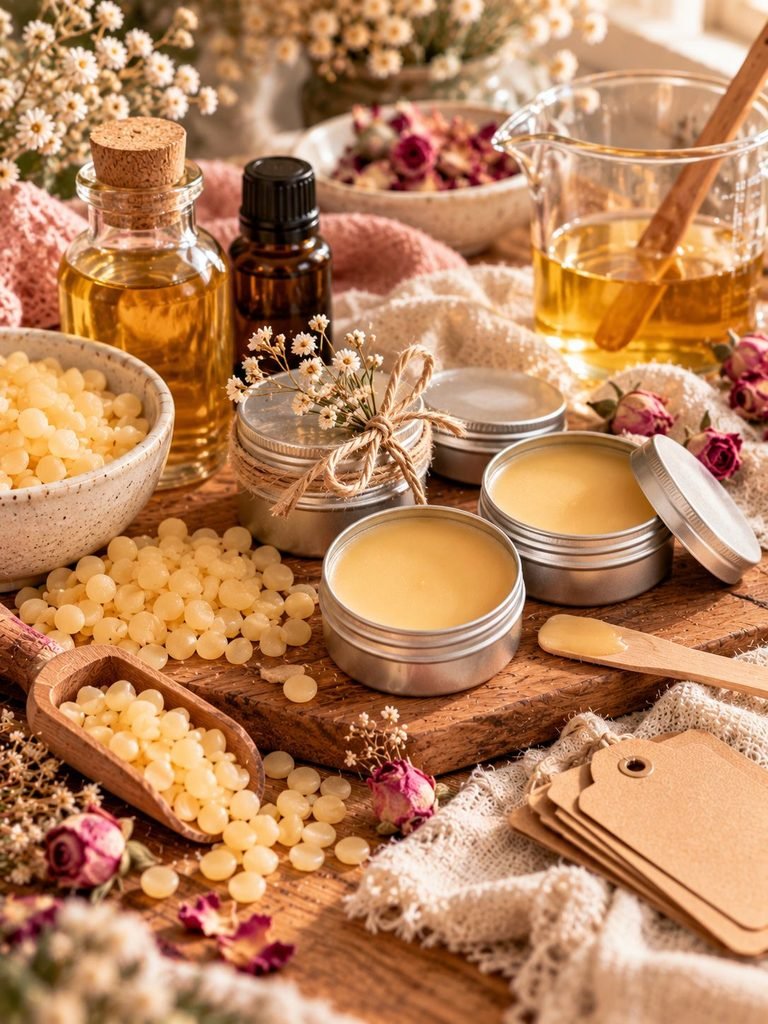
Lip balm is a small, useful gift that fits beautifully into a Christmas care package. A simple formula made with suitable cosmetic-grade ingredients can be poured into reusable tins or glass containers.
What You Will Need
- Cosmetic-grade beeswax
- A suitable carrier oil, such as sunflower or jojoba oil
- Optional cosmetic-grade vitamin E, if appropriate for your formula
- A heat-safe container for melting
- Clean, dry reusable tins
- A small pouring container
How to Make It
- Clean and thoroughly dry your tins and utensils.
- Measure your ingredients using a reliable recipe formulated for lip balm.
- Melt the beeswax and carrier oil together in a double boiler.
- Stir until the mixture is uniform.
- Carefully pour it into the tins.
- Allow the balm to cool and solidify completely.
- Close the tins and label them with the ingredients and date.
Sustainable tip: Reusable metal tins are a useful alternative to disposable plastic tubes. Use only ingredients intended for cosmetic or lip use, avoid unnecessary essential oils and fragrances, and do not gift products with unverified ingredients or shelf life.
8. DIY Natural Potpourri Sachets

Dried botanical sachets are a lovely way to bring a gentle seasonal touch to drawers, wardrobes, or decorative bowls. They are especially suitable for someone who loves flowers, gardening, or natural home décor.
What You Will Need
- Clean cotton or linen scraps
- Dried lavender, rose petals, or other suitable dried botanicals
- Optional whole spices, such as cinnamon
- Needle and thread, or cotton string
- Scissors
How to Make Them
- Cut two small fabric squares or rectangles.
- Sew around three sides, leaving an opening.
- Fill the pouch with completely dry botanicals.
- Sew the opening closed or tie it securely with cotton string.
- Trim loose threads and gently shape the sachet.
- Make a small matching tag explaining the contents.
You can also make a drawstring version for a softer, rustic look.
Sustainable tip: Reuse fabric scraps and dry your own flowers when possible. Avoid synthetic fragrance beads and plastic confetti. Keep sachets away from children and pets who might chew or swallow the contents, and check whether the intended recipient has fragrance sensitivities.
9. A DIY Wooden Herb Garden Kit
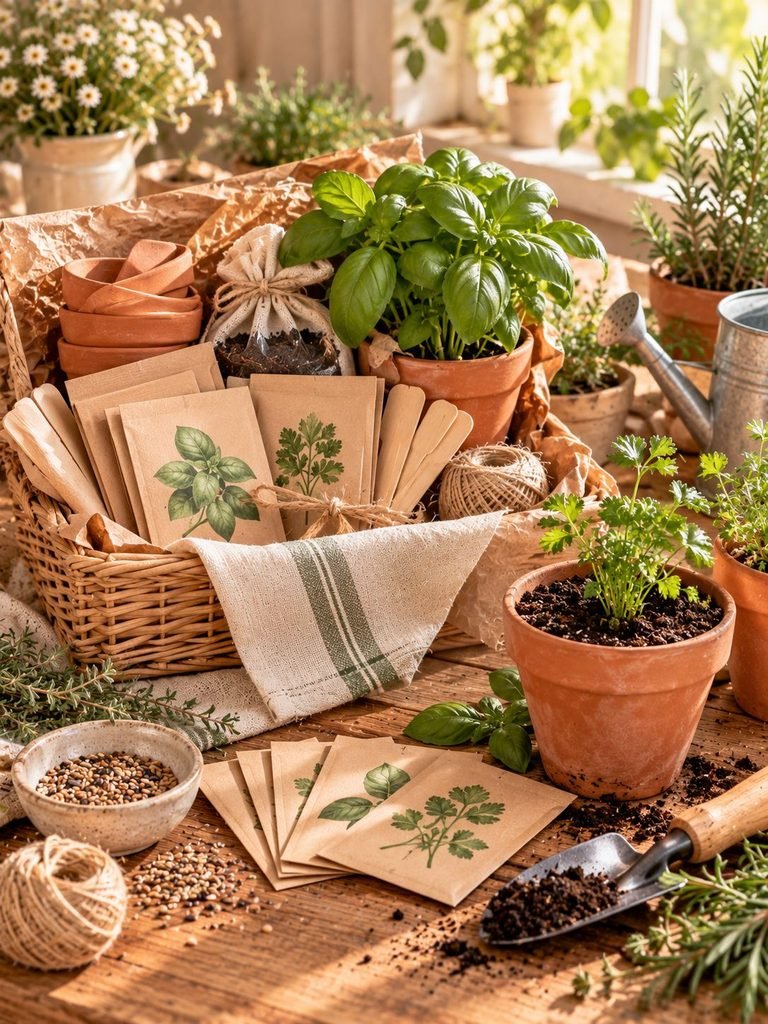
For someone who loves cooking or gardening, a small herb-growing kit can be a gift that continues to bring joy long after Christmas. Fresh herbs can be useful in the kitchen, and growing them offers a rewarding little project.
What You Will Need
- A reusable terracotta pot or another suitable container
- Seeds for herbs such as basil, parsley, or coriander
- Appropriate potting mix
- A small wooden plant marker
- A paper instruction card
- Optional cotton string for wrapping
How to Make It
- Select a suitable container with adequate drainage.
- Add a small, clean packet of seeds appropriate for the recipient’s climate and growing conditions.
- Include enough potting mix for starting the seeds, or explain what type to purchase.
- Make a wooden marker and write the herb’s name on it.
- Prepare a simple instruction card covering sowing depth, light, watering, and expected germination conditions.
- Arrange the materials together in a reusable box or basket.
Sustainable tip: Choose seeds from a reputable source and make sure the herb can grow in the recipient’s climate. A garden kit should include realistic care instructions rather than promising instant results.
10. Homemade Vanilla Extract

For the person who loves baking, homemade vanilla extract can be an especially thoughtful present. It is made with just a few ingredients, although it needs time to develop its flavor, so it is best prepared well ahead of Christmas.
What You Will Need
- Vanilla beans from a reputable food supplier
- Food-grade alcohol suitable for making vanilla extract
- A clean glass bottle with a tight-fitting lid
- A funnel
- A label and preparation date
How to Make It
- Clean and thoroughly dry the glass bottle and funnel.
- Split the vanilla beans lengthwise to expose the seeds.
- Place the beans inside the bottle.
- Add the alcohol according to a tested vanilla-extract recipe.
- Seal the bottle and label it with the ingredients and preparation date.
- Store it in a cool, dark place and allow it to extract for the period specified by your recipe, gently shaking it occasionally if instructed.
For a Christmas gift, you can prepare the bottle well in advance and include a note explaining how the vanilla can be used in cakes, cookies, and desserts.
Sustainable tip: Use a bottle that can be reused, and avoid decorative plastic packaging. Homemade vanilla extract is not suitable for people avoiding alcohol, and the recipient should know that it contains alcohol.
11. A Handmade Fabric Book Sleeve

A fabric book sleeve is an attractive gift for readers who carry books in their handbags or backpacks. It helps protect covers from scratches, dust, and everyday wear while adding a personal handmade touch.
What You Will Need
- Two pieces of outer fabric
- Two pieces of soft lining fabric
- Suitable batting or natural-fiber padding
- Matching thread
- Scissors
- Sewing machine or needle and thread
How to Make It
- Measure a favorite book or choose a standard paperback size.
- Cut the outer fabric, lining, and padding with enough extra room for seams.
- Layer the outer fabric and padding, then quilt them together if desired.
- Sew the outer sleeve pieces together, leaving the top open.
- Sew the lining pieces together in the same way.
- Place the outer sleeve inside the lining with their right sides facing.
- Sew around the top edge, leaving a small opening to turn the sleeve right side out.
- Turn it carefully, close the opening, and tuck the lining inside.
- Press the seams and check that the book slides in comfortably.
Choose a floral cotton print, a neutral linen blend, or fabric in the recipient’s favorite color.
Sustainable tip: Reuse leftover fabric and choose padding that will last through regular use. A well-made sleeve is a gift that can protect many books for years.
12. Homemade Christmas Cookies in a Reusable Tin

Baked gifts are wonderful because they are personal, shareable, and often inexpensive to prepare. A tin of homemade cookies can feel especially special when you include a favorite family recipe.
What You Will Need
- Ingredients for your favorite cookie recipe
- A reusable metal tin
- Baking parchment, if needed
- A handwritten recipe card
- A paper ingredient label
How to Make Them
- Choose a reliable cookie recipe that travels well.
- Prepare the dough according to the recipe.
- Bake the cookies until done and allow them to cool completely.
- Check that the cookies are fully cooled before packing them to prevent condensation.
- Line the tin with suitable food-safe paper if needed.
- Arrange the cookies in layers, separating delicate varieties where necessary.
- Close the tin and attach a label listing ingredients and allergens.
Shortbread, ginger cookies, and simple sugar cookies can all make lovely Christmas gifts.
Sustainable tip: Choose a tin the recipient can reuse and skip disposable plastic trays or cellophane bags. Homemade food gifts should be prepared hygienically and stored according to the recipe. If the cookies contain nuts, dairy, eggs, or gluten, make the ingredients clear.
13. DIY Pressed-Flower Bookmarks

Pressed-flower bookmarks are delicate, inexpensive, and perfect for teachers, readers, and friends who appreciate handmade stationery. They can be created with flowers from your garden or responsibly sourced dried botanicals.
What You Will Need
- Pressed, completely dry flowers or leaves
- Recycled cardstock
- A non-plastic adhesive suitable for paper and botanical materials
- Scissors
- A ruler
- Optional paper tassel
How to Make Them
- Cut the cardstock into narrow rectangles of your preferred bookmark size.
- Arrange the pressed flowers on the card before gluing them down.
- Attach the flowers carefully, using as little adhesive as necessary.
- Allow the adhesive to dry completely.
- Add a second layer of cardstock to the back if extra stiffness is needed.
- Trim the edges neatly.
- Add a tassel made from cotton thread or a narrow paper strip.
You can make each bookmark different by using a small collection of flowers in complementary colors.
Sustainable tip: Use fallen flowers or plants grown in your own garden rather than picking protected wildflowers. Avoid plastic lamination if a completely plastic-free gift is your goal, and keep the bookmark dry to help it last longer.
14. A DIY Natural Cleaning Gift Set

A useful cleaning kit can be a thoughtful gift for someone who enjoys keeping an organized home. Instead of buying a collection of products in disposable packaging, assemble a few reusable household essentials.
What You Will Need
- Reusable cotton cleaning cloths
- A natural-fiber scrubbing brush
- A wooden-handled dish brush, if appropriate
- A bar of household soap suitable for the intended task
- A reusable basket or cardboard box
- A handwritten care card
How to Assemble It
- Wash and dry the reusable cloths before packing them.
- Choose a sturdy brush with replaceable or compostable components where practical.
- Select a suitable household soap and retain its ingredient information.
- Place the items in a reusable basket or a box made from recycled cardboard.
- Write a small care card explaining how to wash and dry the cloths and how to maintain the brush.
- Add a cotton ribbon or paper tag if you would like a festive finishing touch.
Sustainable tip: Avoid homemade cleaning mixtures that combine ingredients without checking their compatibility. Never mix bleach with vinegar, ammonia, or other incompatible cleaners. Choose products for the surfaces they are intended to clean, and do not assume that natural ingredients are automatically safe for every material.
15. Handmade Christmas Ornaments from Salt Dough
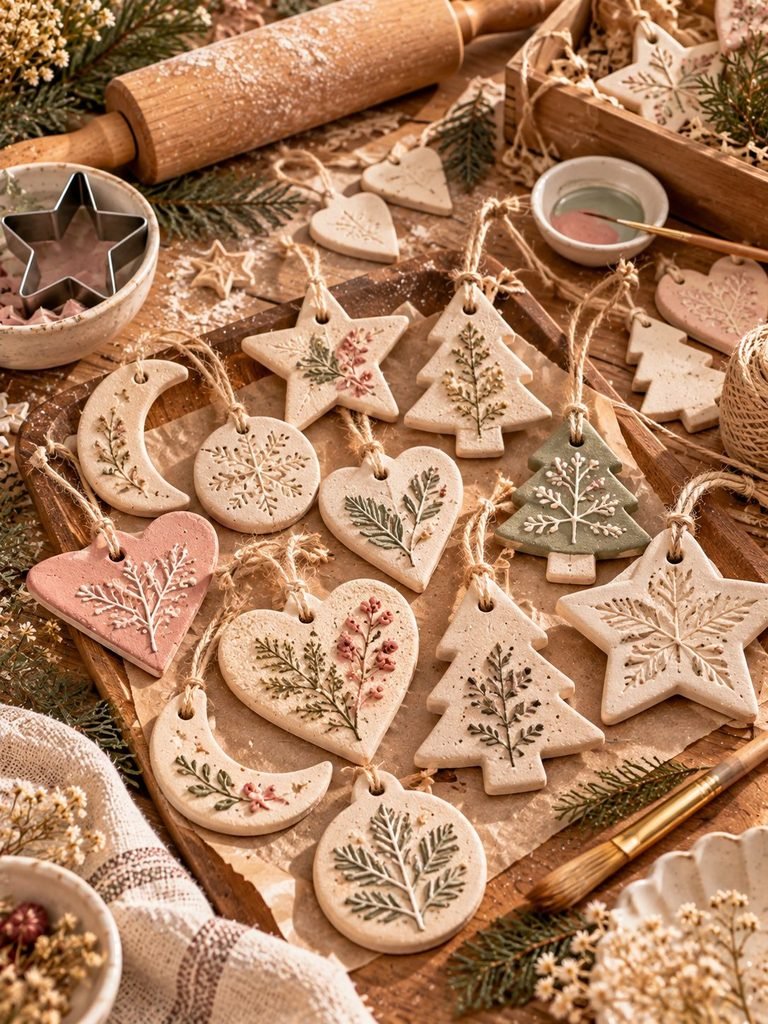
Salt dough ornaments are a charming way to create personalized decorations for family and friends. They are inexpensive, easy to shape, and can become keepsakes when decorated with initials, dates, or simple seasonal designs.
What You Will Need
- 2 cups all-purpose flour
- 1 cup salt
- Approximately ¾ cup water, added gradually
- A rolling pin
- Christmas cookie cutters
- A drinking straw or small tool for making hanging holes
- Baking parchment
- Paints and a suitable clear sealer, if desired
- Cotton string or natural twine
How to Make Them
- Combine the flour and salt in a bowl.
- Gradually add water, mixing until a firm dough forms.
- Knead the dough until smooth and reasonably even.
- Roll it out to an even thickness, around 5–7 mm.
- Cut out stars, hearts, trees, or other festive shapes.
- Make a small hanging hole near the top of each ornament.
- Transfer the shapes to a parchment-lined baking tray.
- Dry them thoroughly in a low oven, following a reliable salt-dough recipe, turning them if necessary. Thick ornaments may take considerably longer.
- Allow them to cool completely.
- Decorate with suitable paints and let them dry fully.
- Add a compatible clear sealer if desired, following the manufacturer’s instructions.
- Thread cotton string through the hole.
For a more natural look, leave some ornaments unpainted and use simple stamped botanical patterns.
Sustainable tip: Reuse tools you already own, avoid plastic glitter, and use natural string. Salt dough ornaments are decorative rather than edible, even though they contain ordinary kitchen ingredients. Keep them away from pets, particularly dogs, because the high salt content can be dangerous if swallowed.
How to Wrap Plastic-Free Christmas Gifts Beautifully
The wrapping can be just as thoughtful as the gift itself. Fortunately, you do not need plastic ribbon, glittery gift bags, or layers of disposable packaging to create something beautiful.
Here are a few simple alternatives:
- Recycled paper: Use plain kraft paper, clean brown paper, or suitable reused wrapping paper.
- Fabric wrapping: Wrap gifts in reusable cotton fabric or use a handmade fabric bag.
- Cotton string: Tie parcels with cotton cord instead of synthetic ribbon.
- Natural decorations: Add a dried orange slice, a cinnamon stick, or a small sprig of an appropriate seasonal plant.
- Handwritten gift tags: Cut tags from recycled cardstock or reuse clean greeting cards.
- Reusable containers: Place food gifts in glass jars or metal tins that the recipient can use again.
Check the local recycling rules before putting paper or packaging in the recycling bin. Some papers contain plastic coatings, glitter, or other materials that make them difficult to recycle.
Also, avoid assuming that every natural-looking material is compostable. Coatings, adhesives, dyes, and mixed materials can affect how a product should be disposed of.
Tips for Making Your DIY Christmas Gifts More Sustainable
A sustainable holiday does not require you to make everything from scratch or buy a cupboard full of eco-friendly supplies. A few thoughtful choices can make a meaningful difference.
1. Use What You Already Have
Before buying supplies, look through your craft cupboard, kitchen, sewing basket, and recycling pile. Leftover yarn, fabric scraps, glass jars, and clean cardboard can become the starting point for several gifts.
2. Choose Quality Over Quantity
One carefully made gift that the recipient will use for years can be more meaningful than several inexpensive items that are quickly discarded. Choose durable materials and finish each project neatly.
3. Avoid Unnecessary Packaging
A reusable container or fabric bag can often serve as both packaging and part of the present. Keep decorations simple and avoid adding materials that the recipient will immediately throw away.
4. Consider the Recipient’s Lifestyle
A beautiful handmade gift is most sustainable when it suits the person receiving it. A keen gardener may love an herb-growing kit, while a book lover might appreciate a fabric book sleeve. Consider allergies, preferences, storage space, and practical needs before choosing a project.
5. Be Honest About Handmade Products
If you make candles, cosmetics, or food, provide clear ingredient information and sensible care instructions. Homemade products should not be presented as safer, healthier, or more environmentally friendly without good reason.
6. Make Gifts in Small Batches
If you are preparing presents for several people, choose two or three projects that can be made in batches. You will save time, reduce leftover supplies, and avoid unnecessary last-minute shopping.
Frequently Asked Questions
What is the easiest plastic-free DIY Christmas gift for beginners?
Reusable fabric gift bags, pressed-flower bookmarks, homemade hot chocolate mix, and salt dough ornaments are all beginner-friendly options. They require relatively simple materials and can be personalized without advanced crafting skills.
What can I use instead of plastic gift wrap?
Recycled paper, reusable fabric, cotton string, and fabric gift bags are excellent alternatives. You can also reuse clean tins, baskets, and boxes that are already available at home.
Are homemade gifts really more sustainable?
They can be, especially when you use materials you already own, create useful items, and avoid unnecessary packaging. However, the environmental impact depends on the materials, energy used, durability, and whether the recipient will actually use the gift.
What are good plastic-free Christmas gifts for people who have everything?
Consumable gifts such as cookies, hot chocolate mix, or homemade vanilla extract can be wonderful choices. Practical gifts such as dishcloths and fabric bags are also useful because they replace items people might otherwise purchase.
Can I make plastic-free Christmas gifts on a small budget?
Absolutely. Salt dough ornaments, pressed-flower bookmarks, homemade cookie tins, and reusable fabric bags can all be inexpensive, particularly when you repurpose supplies you already have.
Final Thoughts
Making plastic-free DIY Christmas gifts is a lovely way to bring more creativity, thoughtfulness, and intention into the holiday season. From cozy handmade dishcloths and reusable fabric bags to homemade treats and personalized ornaments, these projects offer plenty of ways to make your loved ones feel special without relying on unnecessary plastic.
My favorite part of handmade gifting is that each present can reflect the person receiving it. You can choose their favorite colors, make something that suits their everyday life, or add a small personal detail that makes the gift feel truly theirs.
You do not have to make all 15 gifts to have a more sustainable Christmas. Start with one or two projects that excite you, use what you already have, and enjoy the process of creating something with care.
After all, the loveliest holiday gifts are not necessarily the most expensive or elaborate ones. Often, they are the simple, thoughtful things made with a little time, a little creativity, and a whole lot of love.